

US judge rejects Nikola founder's juror bias claim
By Jody Godoy Nikola founder Trevor Milton lost his bid for a new trial on charges of defrauding
2023-08-31 02:24
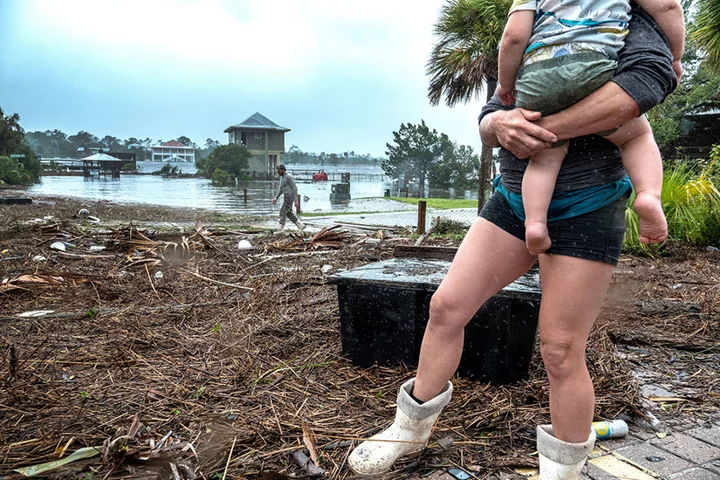
Hurricane Idalia's destruction, in pictures
Hurricane Idalia has hit Florida and is now crossing into Georgia, with nearly 280,000 people without power.
2023-08-31 01:59

US embassy in Haiti urges citizens to leave country 'as soon as possible'
The U.S. Embassy in Haiti on Wednesday urged citizens in the Caribbean country to leave "as soon as
2023-08-31 01:51
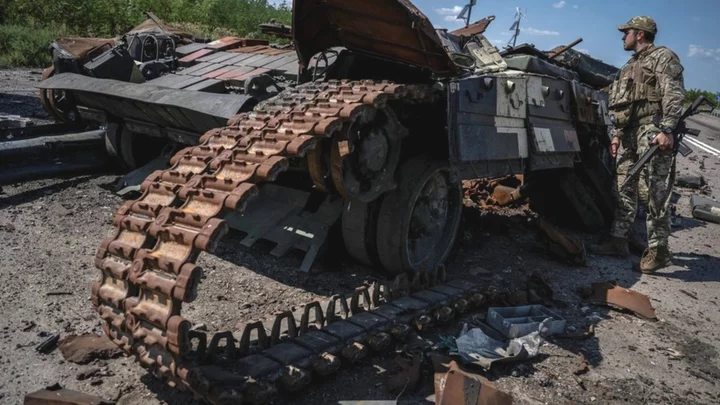
Ukraine gains on southern front could open way to Crimea, says Kyiv
Ukraine claims to have liberated the village of Robotyne, which could lead to a push towards Crimea.
2023-08-31 01:22

Revelers hurl tomatoes at each other and streets awash in red pulp in Spanish town's Tomatina party
Some 15,000 people, including many tourists, have pasted each other with tomatoes in Spain’s annual “Tomatina” street battle in the eastern town of Buñol
2023-08-31 01:19
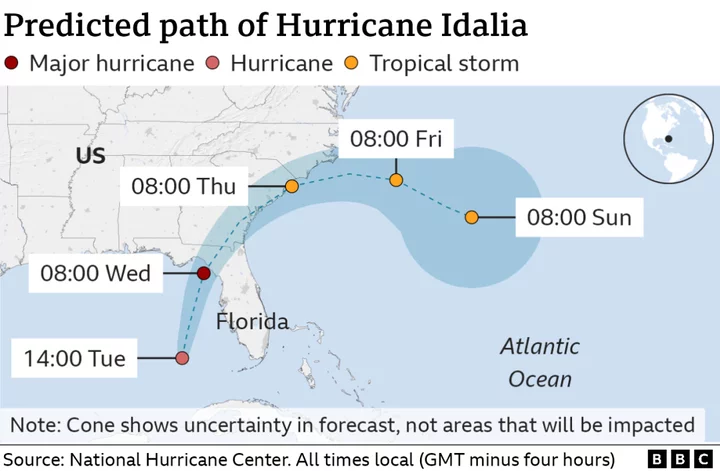
Hurricane Idalia: 'Life-threatening' flooding as storm batters Florida
The storm leaves roads and towns along Florida's 'nature coast' inundated with knee-deep floodwaters.
2023-08-31 01:15
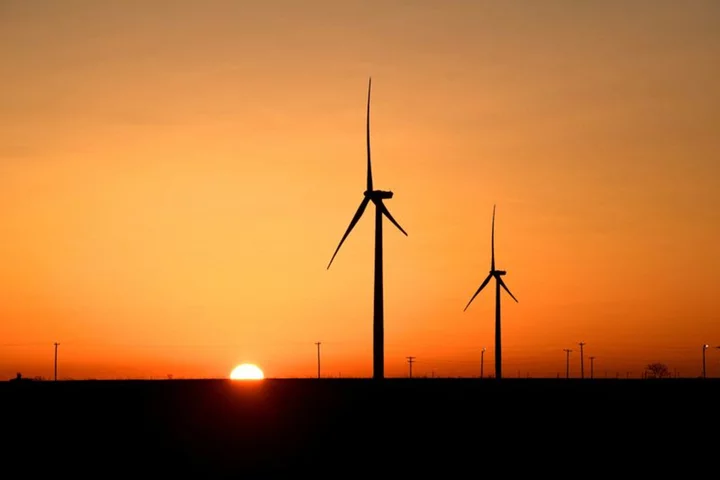
Texas power grid operator issues energy conservation appeal for Wednesday
The Texas power grid operator ERCOT (Electric Reliability Council of Texas) issued an appeal to residents calling for
2023-08-31 00:57
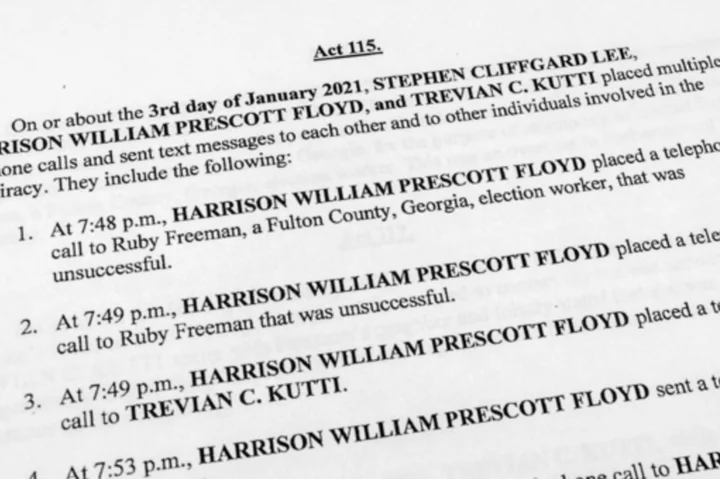
The only defendant in the Georgia election indictment to spend time in jail is released on bond
The only person who spent time behind bars as a result of the indictment related to efforts to overturn Donald Trump’s 2020 election loss in Georgia has been released from jail
2023-08-31 00:24

Geologists have figured out how to locate diamond ‘explosions’
A group of geologists has recently achieved a breakthrough in identifying potential sites for the formation of diamonds. Diamonds, the hardest naturally occurring material we have found, originate under the extreme conditions of immense pressure and high temperatures deep within the Earth's interior. These precious gems are occasionally pushed to the surface in molten rock formations known as kimberlite. However, there are currently two competing theories regarding what is responsible for this rush of kimberlite which brings diamonds to the surface. In a recent study, these theories were closely examined by a research team. In a piece for The Conversation study author and Associate Professor in Earth Science at the University of Southampton, Thomas Gernon explained: “one proposes that kimberlite magmas exploit the ‘wounds’ created when the Earth’s crust is stretched or when the slabs of solid rock covering the Earth - known as tectonic plates - split up.” “The other theory involves mantle plumes, colossal upwellings of molten rock from the core-mantle boundary, located about 2,900km [1,802] beneath the Earth’s surface.” However, neither of these theories adequately explains how magma manages to find its way through the Earth's crust, or the specific composition of the resulting kimberlite. By employing statistical analysis and machine learning, the team analysed the breakup of continents and its correlation with kimberlite formation. Their findings indicated that the majority of kimberlite volcanoes erupt 20 to 30 million years after tectonic breakup. “It also added a major clue,” Gernon explained. “Kimberlite eruptions tend to gradually migrate from the continental edges to the interiors over time at a rate that is uniform across the continents.” Delving deeper into their investigation through computer-generated models, the team ultimately concluded that diamond eruptions stem from a "domino effect." As continents gradually drift apart from each other, they generate rifts of thinned crust. As this happens, regions of thick, cold rock descend into the hot magma beneath, inducing an upsurge of the mantle, which in turn triggers a similar flow in nearby continents. Gernon elaborated on the team's findings, saying, "Various other results from our computer models then advance to show that this process can bring together the necessary ingredients in the right amounts to trigger just enough melting to generate gas-rich kimberlites,” Gernon explained. “Once formed, and with great buoyancy provided by carbon dioxide and water, the magma can rise rapidly to the surface carrying its precious cargo.” Moreover, the same methodology could potentially be employed to locate diamonds and other rare elements. “The processes triggering the eruptions that bring diamonds to the surface appear to be highly systematic,” Gernon siad. “They start on the edges of continents and migrate towards the interior at a relatively uniform rate.” The study is published in the journal Nature. Sign up to our free Indy100 weekly newsletter Have your say in our news democracy. Click the upvote icon at the top of the page to help raise this article through the indy100 rankings.
2023-08-31 00:18
Doctor says scientists secretly made a ‘humanzee’ by mixing humans with chimps
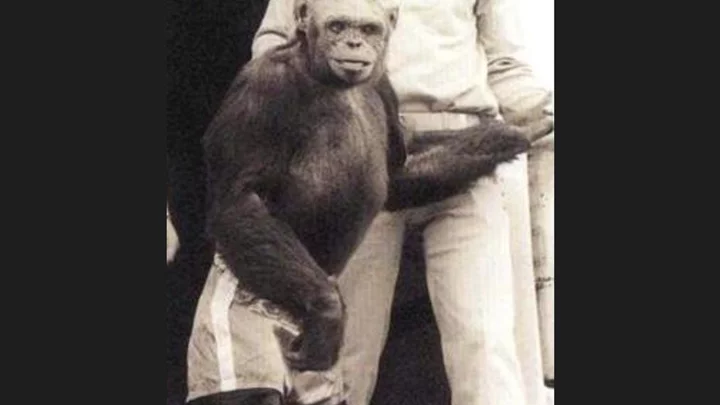
Chimpanzees are our closest relatives, so it’s not surprising that they can do many of the things that we can. They’re able to create tools and can even use sign language, plus they share 98.8 per cent of their DNA with humans. It is, therefore, no wonder that the question has often been asked: could humans and chimps ever produce offspring? The answer, according to one evolutionary psychologist, is yes – and it’s already happened. Gordum Gallup made the eyebrow-raising claims in an interview with The Sun Online back in 2018. He told the news site that a human-chimpanzee hybrid – which he dubbed a “humanzee” – was born in a Florida lab 100 years ago. And if you’re wondering how the scientists behind the experiment managed to keep it hushed up for decades, it’s because – according to Gallup – they swiftly killed the infant when they realised the implications of what they’d done. Gallup, a professor at New York’s University at Albany, said his former university teacher told him that the secret birth took place at a research facility in Orange Park, where he used to work. “They inseminated a female chimpanzee with human semen from an undisclosed donor and claimed not only that pregnancy occurred but the pregnancy went full term and resulted in a live birth,” the psychologist told The Sun. “But in a matter of days, or a few weeks, they began to consider the moral and ethical considerations and the infant was euthanised.” Putting Gallup’s unsubstantiated story to one side, it’s unclear whether a human-chimpanzee hybrid is even possible. Some experts believe that our human ancestors and chimpanzees may have been capable of interbreeding as late as 4 million years ago according to IFL Science, which notes that our last common ancestor lived 6-7 million years ago. However, the website also notes that this theory is widely contested. It also points out that other animals with similar genetic differences to that of humans and chimps, such as horses and zebras, have been able to reproduce. And yet, the offspring are often infertile. Nevertheless, back in the 1970s, plenty of people believed that a chimp called Oliver was a human-monkey hybrid thanks to his humanistic walk, intelligence and physical features (he was said to have a smaller, flatter face than his ape peers, according to Historic Mysteries). It wasn't until tests were conducted on Oliver in 1996 that the matter was finally settled: he had 48 chromosomes so was categorically not a humanzee but a regular chimp. Oliver The Humanzee www.youtube.com Still, one certainty is that scientists continue to tread an ethical tightrope when it comes to investigating chimps and their potential to further biomedical research. In 2021, scientists created the first (publicly documented) part-monkey, part-human embryo by growing human stem cells in a macaque monkey. The aim of the work, which was carried out at California’s Salk Institute, was to help create organs for transplants and improve our understanding of human development and disease progression. In 2020, a team of German and Japanese scientists spliced human genes into the brains of marmosets, resulting in the monkey fetuses having larger, more human-like brains, according to the study, which was published in the journal Science. Once the experiment was complete, the team destroyed their creations “in light of potentially unforeseeable consequences with regard to postnatal brain function”. One thing’s for sure, no scientist wants to find themselves the architect of a real-life Planet of the Apes. Sign up for our free Indy100 weekly newsletter Have your say in our news democracy. Click the upvote icon at the top of the page to help raise this article through the indy100 rankings.
2023-08-31 00:17

Judge enters default judgment against Giuliani in defamation lawsuit from Georgia election workers
A federal judge has entered a default judgment against Rudy Giuliani in a defamation lawsuit brought by two Georgia election workers who say they were falsely accused of participating in fraud during the 2020 election
2023-08-30 23:57
What to do if you're in the middle of a power outage
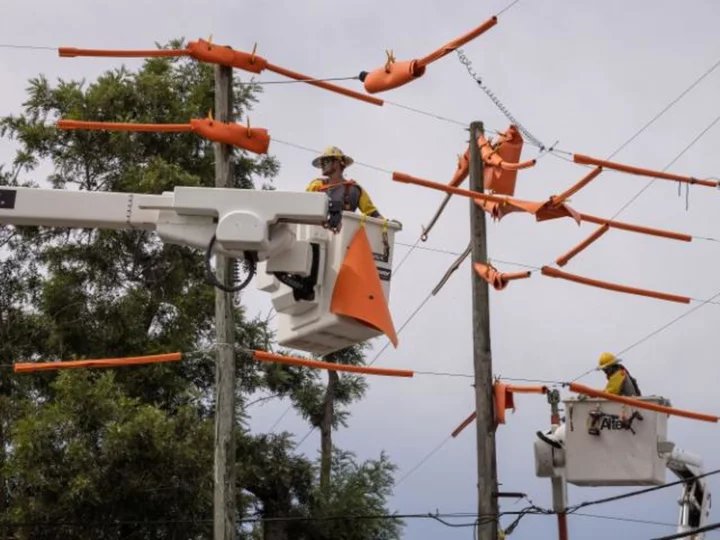
Deadly Hurricane Ian -- downgraded Thursday to a tropical storm as it crawls across Florida -- smashed into the state's southwestern coast on Wednesday, destroying homes and cutting power to millions. If you're without power during the hurricane, here's what you can do to stay safe.
2023-08-30 23:46