

AI is using vast amounts of water
Artificial intelligence is using gallons upon gallons of water. Microsoft alone used more than 2,500 Olympic-sized swimming pools of water in its data centres last year. The latest numbers are leading to yet more questions about the sustainability and environmental dangers of the growth of artificial intelligence and related technology. Artificial intelligence requires vast computing resources, undertaking deeply complex calculations on behalf of people around the world. AI systems tend to be run in the cloud rather than on individual people’s computers, meaning that companies running them must operate vast server farms to deal with the queries of their users. Those server farms in turn need to pump in water to cool themselves down, because of the heat generated by those computers. That has long been a concern for environmentalists, but the sharp growth in artificial intelligence has led to even more use. Microsoft’s water consumption rose 34 per cent between 2021 and 2022, according to its latest environmental report, highlighted by the Associated Press. It was up to almost 1.7 billion gallons. Not all of that is from artificial intelligence. But Shaolei Ren, a researcher at the University of California, Riverside working to better understand the environmental impact of AI told the AP that the “majority of the growth” is because of the technology. Google also said that its water use had increased by 20 per cent over the same period. That varied across its different data centres, which are based in different parts of the US. For each 5 to 50 prompts, or questions, put to ChatGPT, it uses 500 millilitres of water, according to a paper that will be published by Professor Ren and his team later this year. Many technology companies have expressed concerns about their own water use, and how to minimise any negative effects of their data centres. The environmental concerns can be especially pressing because the use of water can be focused in particular areas around a data centre, meaning that the damage may not be spread. Google said last year for instance that “Wherever we use water, we are committed to doing so responsibly”. That includes analysing where water is being used and how much stress it might put on the surrounding area, for instance. Read More AI can help generate synthetic viruses and spark pandemics, warns ex-Google executive China’s ‘government-approved’ AI chatbot says Taiwan invasion likely Google launches AI to go to meetings for you
2023-09-12 00:55
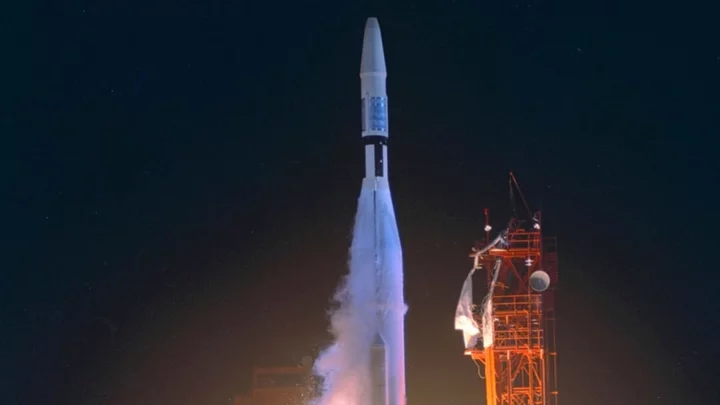
On This Day in 1962, NASA Launched and Destroyed Mariner 1
A software error coupled with a radar failure led to the loss of NASA's first Venus probe.
2023-09-12 00:50

Morocco earthquake: Birmingham mother's fear for survival
Shabina Bano says she did not know if her family would survive when Friday's quake struck.
2023-09-12 00:20
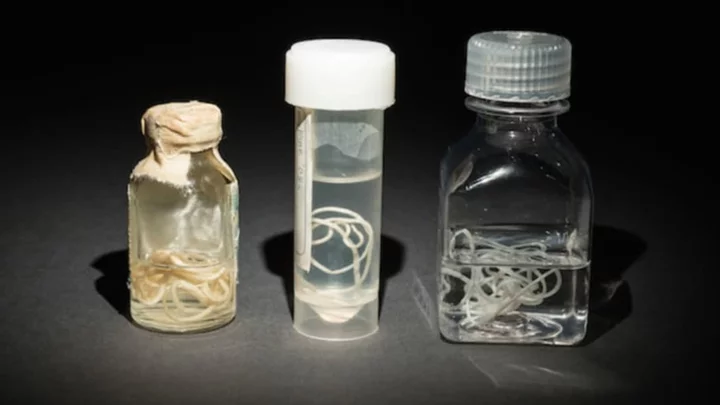
10 Facts About Guinea Worm Disease
Dracunculiasis, or Guinea worm disease is, by all accounts, pretty awful: A person with the disease hosts a parasitic worm that forms a painful blister under the skin that eventually bursts, allowing the worm to emerge and lay its eggs in water. Those afflicted don't just endure pain (although there's plenty of that); they also run the risk of secondary infection and permanent paralysis, and there are economic consequences to the disease, too.
2023-09-12 00:18

UK government may ban American XL bully dogs after a child was attacked
Britain’s home secretary says she is seeking “urgent advice” on banning a type of American Bully dog, highlighting an attack on a 11-year-old girl over the weekend
2023-09-12 00:17

September 11: America remembers lives lost in al-Qaeda attacks
President Joe Biden will mark the 22nd anniversary in Alaska on his way back from Vietnam.
2023-09-12 00:17

Disney, Charter settle cable dispute hours before 'Monday Night Football' season opener
Disney and Charter Communications announced a deal to settle a dispute that had cut some 15 million cable TV customers off from ESPN and other Disney-owned stations
2023-09-12 00:16

UK scientist who created Dolly the Sheep clone dies at 79
LONDON British scientist Ian Wilmut, whose research was central to the creation of the famous cloned animal, Dolly
2023-09-12 00:15
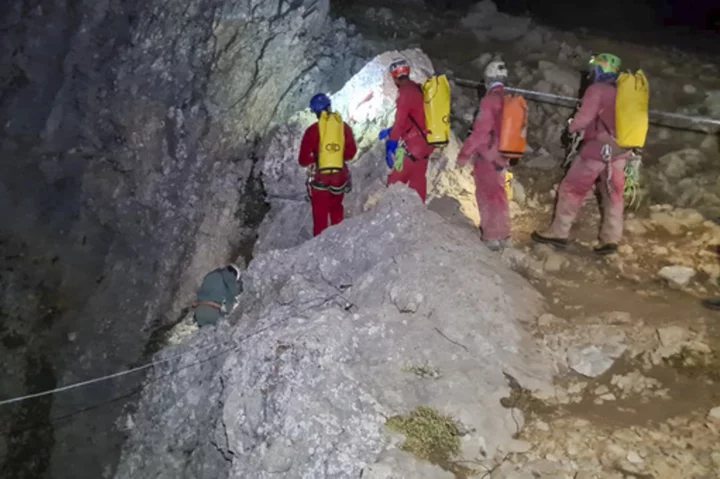
What to know about a major rescue underway to bring a US researcher out of a deep Turkish cave
A major rescue operation is underway in Turkey’s Taurus Mountains to bring out an American researcher who fell seriously ill nine days ago, about 1,000 meters — or 3,000 feet — from the entrance of one of world’s deepest caves
2023-09-11 23:59
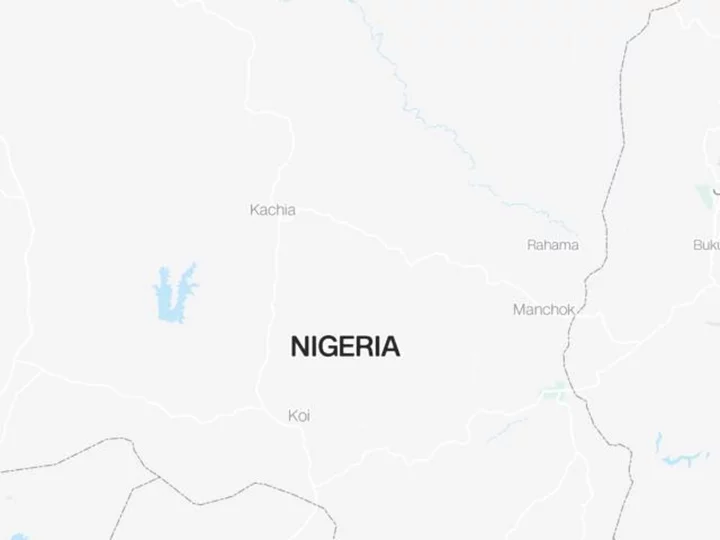
Children among 26 people dead in Nigeria boating accident
At least 26 people, mostly women and children died when a boat carrying more than 100 farmers capsized early Sunday in north-central Nigeria, the region's second boat tragedy in three months, authorities said.
2023-09-11 23:59

Alleged rape of Irish rugby fan in France investigated
French prosecutors have opened an investigation following the incident in Bordeaux at the weekend.
2023-09-11 23:28
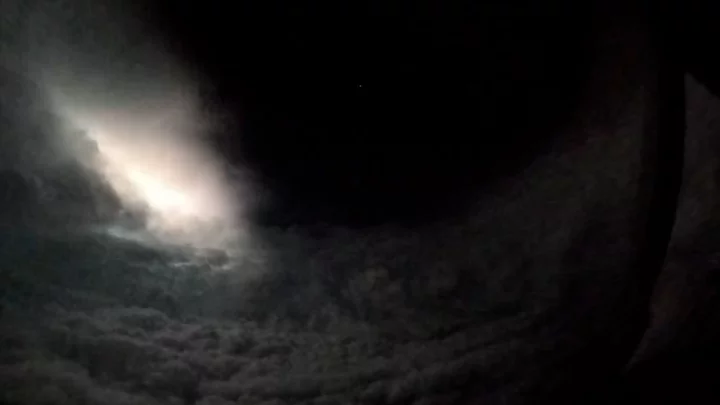
Storm chasers capture frightening footage from inside Hurricane Lee
Storm chasers filmed the inside of a hurricane and it looks just as terrifying as you might imagine it would. The footage taken from inside the eye of Hurricane Lee was captured on Friday (8 September) as the storm moved over the Atlantic Ocean. The video taken shows lightning striking inside the Category 4 hurricane, illuminating the cloud wall around it and with the black eye overhead. The stunning clip was captured by the U.S. Air Force Reserve's 53rd Weather Reconnaissance Squadron in Biloxi, Mississippi. They are affectionately known as the “Hurricane Hunters”. As a Category 4 storm, Hurricane Lee has sustained winds of between 130 to 156 mph. The storm was located off the coast of Puerto Rico and was forecast to move northwards. The footage was able to be captured thanks to the squadron’s WC-130J Hercules aircraft. These planes are specifically designed for flying weather reconnaissance and have equipment onboard including sensors and instruments to measure the profile of a hurricane’s wind, temperature and pressure. The Hercules aircraft can stay airborne for up to 18 hours ensuring the crew onboard can record the weather data over a long time period. In a statement released by the U.S. National Oceanic and Atmospheric Administration's (NOAA) National Hurricane Center, they were unable to determine what the impact of the storm might be on the country’s eastern coast yet. The statement read: “It remains too soon to know what level of impacts, if any, Lee might have along the U.S. East Coast and Atlantic Canada late this week.” Hurricane Lee is the fourth hurricane to be recorded during the 2023 Atlantic hurricane season, along with nine other named storms. Sign up to our free Indy100 weekly newsletter Have your say in our news democracy. Click the upvote icon at the top of the page to help raise this article through the indy100 rankings.
2023-09-11 23:23