

How much do Allan dolls cost? Prices soar following Michael Cera's appearance as popular character in 'Barbie'
The first Allan doll was introduced by Mattel in 1931 and was marketed as Ken's friend, designed to fit into Ken's clothes
2023-07-25 19:27

Who was Walter Scheib? After tragic death of Obama's cook, details of drowning death of Hillary Clinton's chef in 2015 resurface
Twitter users have drawn parallels between Tafari Campbell's tragic death and Walter Scheib's drowning
2023-07-25 19:26

China appoints Wang Yi as its new foreign minister, replacing absent Qin Gang
BEIJING China named Wang Yi as its new foreign minister on Tuesday, replacing Qin Gang who has left
2023-07-25 19:26

Indonesian police crack down on traffickers who sent 122 people to sell their kidneys in Cambodia
Indonesian police are investigating the illegal trade in human organs involving police and immigration officers who were accused of helping traffickers send 122 Indonesians to a hospital in Cambodia to sell their kidneys
2023-07-25 19:24

Why is Dr Peter Hotez warning movie-goers against 'Barbie' and 'Oppenheimer'? Scientist asks people to wear ‘pink N-95’
Hotez has lately been in the news for his positive stand on vaccines for different infections, which includes Covid-19
2023-07-25 19:21

What was MrBeast’s young fan’s unique oath? Pledge to YouTuber goes viral but fans believe it’s ‘just an act’
Young fan Steven uploads a video vowing not to breathe until MrBeast comments, seeking his attention
2023-07-25 19:18

China's foreign minister Qin Gang ousted in surprise shake-up of Xi Jinping's foreign policy leadership
China's foreign minister Qin Gang has been suddenly replaced by his predecessor Wang Yi in a surprise shake-up to China's foreign policy leadership.
2023-07-25 19:15

Your fancy kitchen countertop has a deadly secret
They are an almost inevitable feature of any upmarket kitchen, but the glamour and durability afforded by quartz countertops come at a heavy cost. We’re not talking about their often eye-watering price tags, but about the deadly toll they’re taking on the workers who make them. A new study, conducted by the University of California – San Francisco (UCSF), has concluded that these craftspeople are dying of lung disease at a young age as a result of their work. “Every day I hope that the phone rings telling me to come to the hospital to get my new lungs,” former countertop maker Leobardo Segura-Meza said in a press release for the medical report, which was published in JAMA Internal Medicine on Monday. Sign up for our free Indy100 weekly newsletter Segura-Meza, 27, first took a job as a stone worker in LA when he was just 17. He explained that he would always wear a mask and use dust-reducing tools when he cut and ground the slabs. And yet, in February 2022, he suffered from such severe shortness of breath that he was forced to go to A&E. A lung biopsy revealed that he had silicosis and he has been on an oxygen tank ever since. He’s now no longer able to financially support his wife and children and, although he’s been approved for a lung transplant, he fears he’ll run out of time. Two fellow stone workers died while they were on the waiting list, the press release points out. So why is quartz so bad? How many people have died so far? And what’s being done about it? What exactly is quartz and why is it particularly dangerous? Quartz is the most abundant mineral in the Earth's crust and is made up of silicon and oxygen. It is resistant to chemical and physical weathering, which makes it ideal for use in kitchen worktops. “Quartz” countertops aren’t made of pure quartz, however. They consist of an artificial material made up of pieces of natural quartz bonded together with adhesive, resins and, often, glass. They are popular, not only because they are robust and easy to clean, but because natural quartz can be found in a variety of colours and can also be easily dyed. The danger associated with quartz comes from the tiny particles of toxic dust that are released when it is cut, ground and polished. Over time, exposure to this dust can lead to a disease called silicosis. Particles from this engineered stone are far more dangerous than from its all-natural counterparts because of its high concentration of silica and the polymer resins and dyes that are added to it. The risk of silicosis from artificial stone was first identified in Israel in 2012, and the first US case was identified in Texas in 2015. Since then, California has become an epicentre of the disease, which used to be known among coal miners as “black lung”. What is silicosis? Silicosis is a lung disease caused by breathing in tiny bits of silica. Over time, exposure to silica particles causes inflammation which, over time, can lead to permanent lung scarring. This, in turn, makes breathing difficult. Complications from silicosis can include tuberculosis, lung cancer, chronic bronchitis, autoimmune disorders and kidney disease, the American Lung Association warns. Approximately 2.3 million US workers are exposed to silica because of their jobs, including 2 million in construction and 300,000 in other industries, according to the health organisation. How many people have died after working on quartz countertops? Researchers at UCSF and UCLA collaborated with public health officials to identify 52 stone workers in the state who had recently been diagnosed with silicosis. Of these, 51 were Latino immigrants – like Segura-Meza – and most were diagnosed between 2019 and 2022. For 20 of the patients, the disease had already reached an advanced stage at the time of their diagnosis, and have now 10 died. Their median age was 45, with an average work history of 15 years, according to the report. “Increasing case counts of silicosis among stone fabricators over the last 10 years and accelerated progression of disease transforms the paradigm of an all-but-previously-forgotten disease in the US,” said Jane Fazio, a co-author of the UCSF study. “Our study demonstrates severe morbidity and mortality among a particularly vulnerable group of young underinsured and likely undocumented Latino immigrant workers.” What’s being done about all this? The study’s authors are calling for the implementation of new measures to protect workers from exposure to silica dust and help ensure early diagnosis of silicosis. There is also some discussion of a potential ban of high-silica products. “Our paper raises the alarm,” said Sheiphali Gandhi, a UCSF pulmonologist and co-author of the study. “If we don't stop it now, we're going to have hundreds if not thousands of more cases. Even if we stopped it now, we're going to be seeing these cases for the next decade because it takes years to develop.” No country has yet banned quartz-based materials, but Australia has considered it and is developing new regulations to help reduce the risk of silicosis, the press release for the study notes. In California, the Los Angeles County Board of Supervisors is reportedly weighing up a potential ban, and the state’s Division of Occupational Safety and Health has begun drafting emergency rules. However, among the challenges faced by affected workers are a lack of access to health care and the need to support their families. Of the patients included in the study, 45 per cent continued working after their diagnosis. Furthermore, demand for quartz surfaces is booming. According to one research report, the market for quartz countertops will grow to $13 billion (more than £10 billion) by 2027. All this leads us to believe that the problem isn't going away any time soon. Have your say in our news democracy. Click the upvote icon at the top of the page to help raise this article through the indy100 rankings.
2023-07-25 18:59
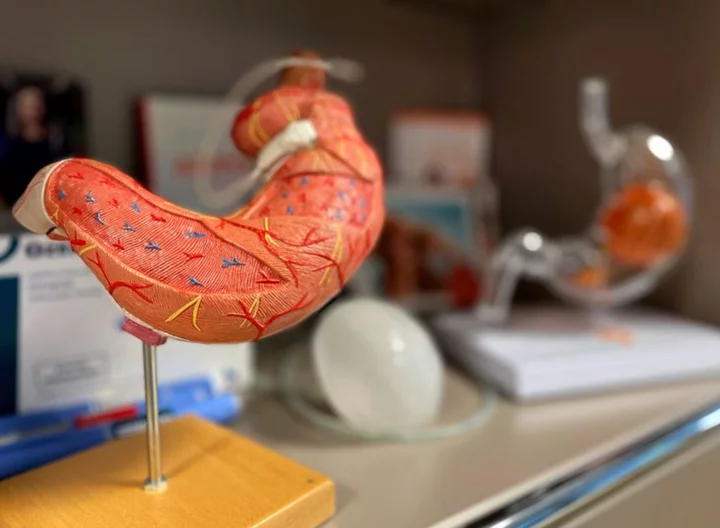
"Last hope": Eager Germans are prepared to pay for weight-loss drug
By Ludwig Burger and Maggie Fick FRANKFURT/LONDON Frustrated after countless failed diet and exercise attempts, 41 year-old Jessica
2023-07-25 18:58

Israel braces for unrest over divisive judicial reform
Israel braced for fresh strikes and protests Tuesday following a divisive parliamentary vote on a controversial judicial reform which has split the nation and...
2023-07-25 18:56
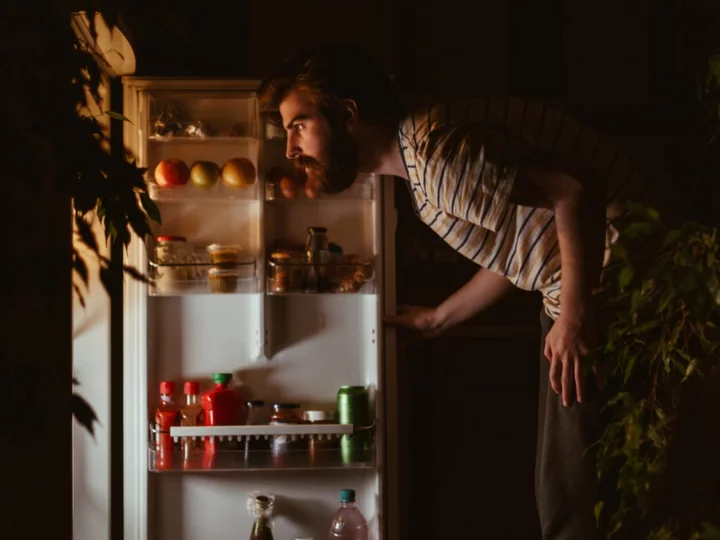
Late night snacking could increase risk of diabetes and heart disease, study says
Eating a snack late at night carries significantly more negative health implications compared to snacking during the day, a new study has found. According to researchers at King’s College London, people who eat most of their snacks in the evening after 9pm saw larger spikes in their blood sugar compared to those snacked earlier in the day. The group who snacked later also had higher concentrations of fat in their blood compared to those who snacked earlier. The researchers studied data from 1,000 people who took part in the Zoe Predict study. The participants kept a food diary and wore blood sugar monitors in order to keep track of the impact of snacking. On average, they ate two snacks a day, with one in three “late evening snackers” eating most of their snacks after 9pm instead of between meals. High blood sugar and fat can lead to diabetes and heart disease, studies have found. People with diabetes are also more likely to have other conditions that raise the risk of heart disease, such as high blood pressure. The Zoe Predict project is a group of in-depth nutritional research studies that aim to reveal how and why people respond differently to the same foods. Kate Bermingham, a postdoctoral fellow at King’s College London and lead author of the study, said: “Surprisingly little has been published on snacking, despite the fact that it accounts for 20 to 25 per cent of energy intake. “Predict followed a large number of people and captured detailed information on their snacking behaviours, allowing this in-depth exploration of snacking on health.” Researchers analysed the relationship between the number of snacks participants ate, the quality of the snacks and the timing with blood fats and insulin levels. Snacking on higher quality foods, which are described as foods that contain significant amounts of nutrients relative to the calories contained, was associated with better bodily responses. The study concluded that the most important factor in determining the body’s response is the quality of snacks, not how often or how much they are consumed. Foods like fruit or vegetables resulted in a better blood fat and insulin response compared to processed foods, such as biscuits and cake. Bermingham added: “Our study showed that the quality of snacking is more important than the quantity or frequency of snacking, thus choosing high quality snacks over the highly processed snacks is likely beneficial. “Timing is also important, with late night snacking being unfavourable for health. This may mean that, universally, snacking late in the evening and interrupting the overnight fasting window is detrimental to health.” The study was presented at a meeting of the American Society for Nutrition. Read More My Taylor Swift exercise class has led me down a luxury fitness rabbit hole Husband fired from family business after wife roleplayed with reborn dolls MrBeast YouTuber Kris Tyson comes out as transgender: ‘I’m excited to authentically be myself’ Scientists share the 8 habits that impact your lifespan the most Cara Delevingne says her journey to sobriety has been worth ‘every second/ Bisexual people ‘experience worse health than other adults’
2023-07-25 18:53

General Motors Q2 earnings rise 52% on strong sales, prices and automaker raises outlook for 2023
General Motors posted $2.54 billion in second-quarter net income, a 52% increase over a year ago
2023-07-25 18:49