

Shingles explained as Holly Willoughby takes time off from This Morning
Holly Willoughby has announced that she “may not” be c-hosting ITV’s This Morning in the coming week due to contracting shingles. The 42-year-old TV presenter wrote on her Instagram Story on Sunday (16 April): “Hi, just to let you know, I may be away for the rest of the week as I have shingles.” “I’ll be back as soon as I’m better. Huge love,” she added. Shingles can be a very painful experience that affects around one in four adults in their lifetime. The infection, also known as herpes zoster, is caused by the varicella-zoster virus which also causes chickenpox. The virus is extremely common, with more than 90 per cent of the world’s population having it. It is usually contracted when people get chickenpox as children, but the virus does not go away, instead, it will lay dormant in the body’s nervous system for years. For about a third of people who get the virus, it will reactivate some years later and cause shingles. Here is everything you need to know about the symptoms of shingles and how to treat it: What are the symptoms? A person who gets shingles will experience a painful rash that can occur anywhere on the body. Early signs of shingles could be a tingling or painful feeling in an area of skin, a headache or feeling generally unwell. According to the NHS, the rash usually looks like “a single stripe of blisters that wraps around the left side or right side of your torso”. They appear as blotches on the skin that become itchy blisters, which can break and ooze fluid. The rash can be red, but this can be harder to see on brown or black skin. The rash can also appear on your face, eyes and genitals. If it appears around your eyes, it can affect your sight or hearing and make it hard to move one side of your face. According to the Mayo Clinic, if left untreated, the infection can lead to permanent eye damage. After a few days, the blisters will dry out and become scabs. If a rash appears on both the left and right side of the body, it is unlikely to be shingles. How is it treated? Shingles can take up to four weeks to heal, but can have more severe consequences in older people above the age of 50. If the symptoms are not serious, patients can take paracetamol to ease the pain and use a cool compress on the rash several times a day to soothe it. It is also recommended that you keep the area with the rash clean and dry to reduce the risk of infection and wear loose-fitting clothing. But there are some situations in which it is recommended you contact your GP or call 111. Due to the heightened risk in older people, you should seek help if you are aged 50 or older. People with a weakened immune system should also contact the health service, as well as those who have a rash that is widespread and painful, or has appeared near an eye. Are shingles contagious? Shingles are not contagious and you cannot spread them. However, if you come into contact with someone who has not had chickenpox and has not been vaccinated against chickenpox, they could catch chickenpox from you. The NHS recommends you avoid being around pregnant people who have not had chickenpox before, people with a weakened immune system, and babies that are less than a month old. Is there a vaccine against shingles? Yes, but it is only available on the NHS to people in their 70s. Shingles can be fatal for around one in 1,000 over-70s who develop it. The vaccine injection only needs to be given once. However, some people who cannot have the routine vaccine for health reasons will need two doses. Getting the vaccine will reduce your risk of getting shingles, and if you do get it, your symptoms may be milder and the illness shorter. If you already had shingles, you can still get the vaccine to protect yourself against developing it again. You may have to wait up to one year after you have recovered from the illness before you can get the vaccine. Read More Five signs of sepsis you need to know and act on immediately EuroMillions winner burned through £40m by spending £100K a week Tech entrepreneur, 45, spends $2m a year on reverse ageing to achieve body of an 18 year old: ‘Horrifying’ Shingles symptoms, what causes it and how to treat the virus When do the clocks go back in the UK this year? Hibernation mode: 5 small self-care adjustments to make before the clocks change
2023-10-26 15:53
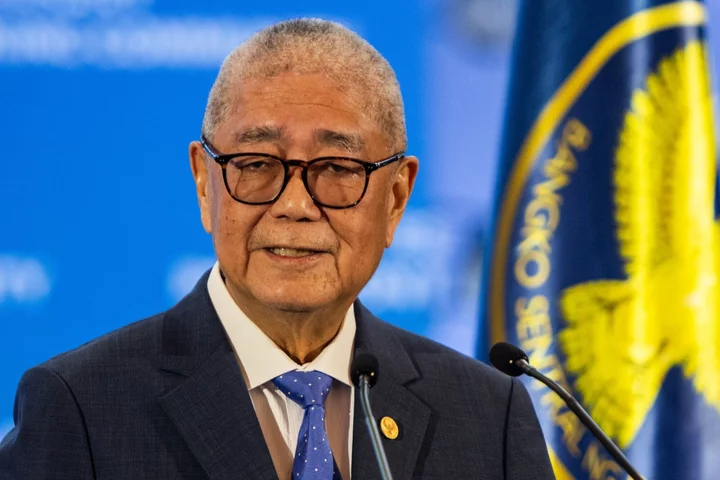
Philippines Announces Quarter-Point Rate Hike in Off-Cycle Move
The Philippine central bank resumed tightening monetary policy as it lifted its benchmark interest rate by 25 basis
2023-10-26 15:51

Man dies after his e-scooter is struck by a van
A man in his 50s has died after his e-scooter was struck by a van in County Sligo.
2023-10-26 15:46
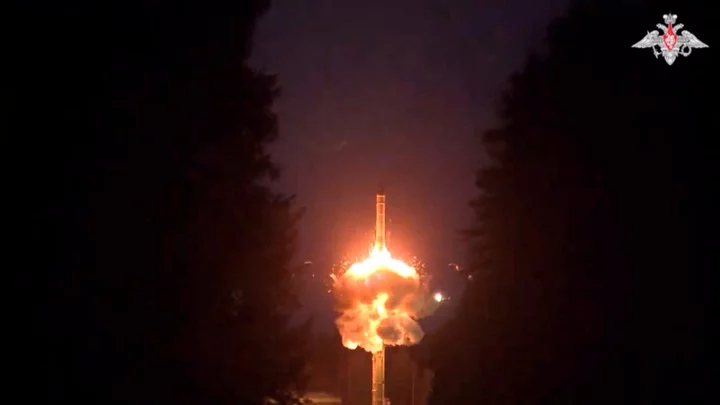
Putin presides over rehearsals of ‘massive’ Russian nuclear strike
Vladimir Putin has presided over a rehearsal to deliver what the Kremlin described as a “massive” nuclear strike, including the test launch of multiple ballistic missiles. While Russia holds similar rehearsals every autumn, Wednesday’s show of force came just hours after Moscow’s withdrawal from a significant nuclear test ban treaty and as its invasion of Ukraine approaches its second winter. Footage broadcast on state television showed the Russian president overseeing the annual exercises, dubbed “Grom”, via video call. The purpose of the drill was to “deliver a massive nuclear strike... in response to an enemy nuclear strike”, said defence minister Sergei Shoigu. The Kremlin said a Yars intercontinental ballistic missile was launched from a test site to a target in Russia’s far east, a nuclear-powered submarine launched a ballistic missile from the Barents Sea and Tu-95MS long-range bombers test fired air-launched cruise missiles. Russia, which has the world’s largest nuclear arsenal, has passed a bill in parliament that would revoke its ratification of a key nuclear test ban treaty, the Comprehensive Nuclear Test Ban Treaty (CTBT). Though it has never formally come into force, the CTBT has helped deter nuclear weapons testing around the world, with only North Korea conducting an explosive nuclear bomb test this century. Ukraine has said Russia’s withdrawal of its CTBT ratification was an attempt at “nuclear blackmail”. Mr Putin, who will be sent the bill for final approval, has said revoking Russia’s ratification would “mirror” the stance of the US, which has signed but did not ratify the nuclear test ban. Video footage of Wednesday’s military exercise released by the Russian defence ministry showed the land- and submarine-launched missiles piercing the night sky with loud roars, while nuclear-capable bomber aircraft departed from an airfield under the cover of darkness. “Under the leadership of the supreme commander-in-chief of the armed forces of the Russian Federation, Vladimir Putin, training was conducted with the forces and means of the ground, sea and air components of the nuclear deterrent forces,” the Kremlin said in a statement. “During the training, practical launches of ballistic and cruise missiles took place. The tasks planned in the course of the training exercise were fully accomplished,” it said. The latest developments have raised widespread concerns that Moscow could resume nuclear testing in attempts to discourage the West from continuing to offer military support to Ukraine. Russia’s deputy foreign minister Sergei Ryabkov said earlier this month that Moscow will continue to respect the ban and will only resume nuclear tests if Washington does it first. On Wednesday, Mr Ryabkov said the Russian foreign ministry had received proposals from the US to restart discussions regarding strategic stability and arms control matters. However, he pointed out that, given the current political climate, Moscow does not view it as feasible. “We aren’t ready for it because the return to a dialogue on strategic stability... as it was conducted in the past is impossible until the US revises its deeply hostile policy course in relation to Russia,” Mr Ryabkov told reporters in comments carried by Russian news agencies.
2023-10-26 14:58
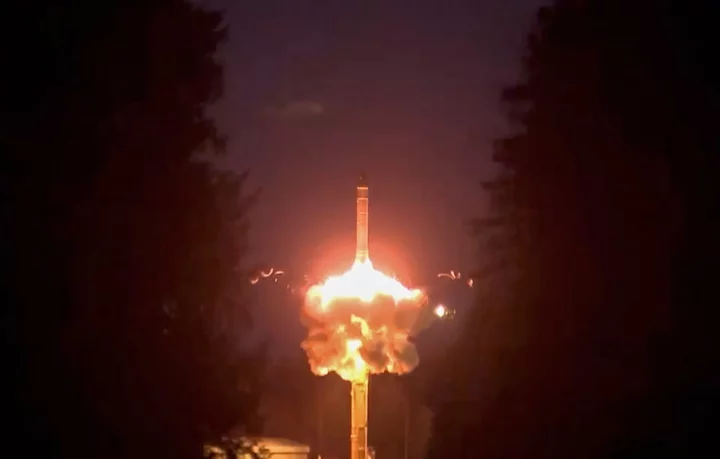
Ukraine-Russia war - live: Putin ‘rehearses massive nuclear strike’ as drones strike near Khmelnytskyi plant
Vladimir Putin has tested Russia’s ability to launch a massive retaliatory nuclear strike as he pulled the country out of an international test ban treaty. “Practical launches of ballistic and cruise missiles took place during the training,” Russian defence minister Sergei Shoigu said. A Yars intercontinental ballistic missile was fired in Russia’s far east, a nuclear-powered submarine launched a ballistic missile from the Barents sea, and long-range bombers test fired air-launched cruise missiles, according to the Kremlin. On Wednesday, Russia’s parliament unanimously approved legislation pulling the country out of the international Comprehensive Nuclear Test Ban Treaty, designed to limit the proliferation of nuclear weapon testing. It comes as a Russian drone attack damaged buildings near the Khmelnytskyi nuclear power plant in western Ukraine, wounding 20 people. The Ukrainian air force destroyed all 11 Russian drones, according to the military. Damage was caused by blast waves and falling debris. “At night, the enemy struck territory near the Khmelnytskyi nuclear power plant. As a result of the explosion, windows in administrative and laboratory buildings have been damaged,” Ukraine’s Energy Ministry said on the Telegram messaging app. Read More Russian drones likely targeted Khmelnytskyi nuclear power station, Zelensky says Business owners in a Ukrainian front-line city adapt even as 'a missile can come at any moment' Russian forces simulate nuclear strike as upper house rescinds ratification of test-ban treaty
2023-10-26 14:45
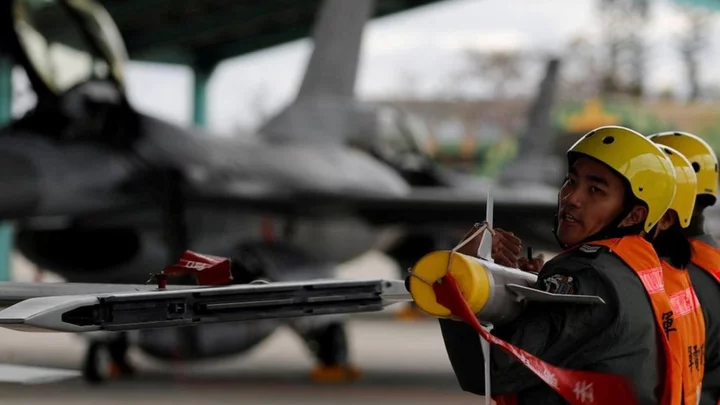
Taiwan ex-colonel gets 20 years for spying for China
The retired officer was convicted of recruiting active-duty officers to give China military secrets.
2023-10-26 14:45

Europe's central bank is set to halt rate hikes as the Mideast war casts a shadow over the economy
The European Central Bank is likely taking a break from interest rate increases
2023-10-26 14:28

Hibernation mode: 5 small self-care adjustments to make before the clocks change
With the clocks going back on October 29, longer, darker nights are imminent – and many of us may be nervous about how this could impact our wellbeing. But, there are some little acts of self-care that could help. Here’s how to switch up your self-care routine as the clocks change… 1. Spend more time outdoorsIt may be getting colder, but time outside could be the best thing for you to protect your emotional welfare as the shorter days draw in. “When the clocks change, the internal body clock, our circadian rhythm, has to reset and it can become out of sync with our standard night-and-day cycle. It can take a few days for our body to adjust to the new sleep pattern, which can affect our hormones and temperature,” explains Dr Harriet Leyland, clinical advisor at myGP. To mitigate this, “spend more time outdoors”, she suggests. “Sunlight can alleviate drowsiness as it limits the release of melatonin, a hormone that induces tiredness and gets you ready for bed.” Jodie Relf, a Pilates instructor and registered dietitian from myOva, suggests making this part of your daytime routine. “[Getting outside] can be more challenging once the clocks have changed, it’s often dark for many of us both going to and returning from work. Therefore trying to get outside during the day, at lunchtime, perhaps, can be beneficial in the winter months,” says Relf. 2. Think about your body temperatureYou may be feeling the cold outside, but we don’t want to overheat indoors – especially at bedtime. “We sleep better in a cooler environment, with the ideal bedroom temperature reported to be a cool 16-17C,” says Dr Guy Meadows, co-founder and clinical lead at Sleep School. “For best sleep, switch off the central heating and swap your lightweight summer duvet for a higher tog winter one. Alternatively, use a combination of sheets, quilts and blankets, as this allows you to more easily regulate your temperature at night for better sleep.” 3. Prepare for good sleepIf you always struggle with sleep when the clocks change, give yourself a helping hand by being prepared. “Gradually adjust your bedtime in the few days leading up to the clocks changing – go to bed 15-30 minutes earlier each night for a few nights in the lead-up,” suggests Meadows, explaining this will help with the body-clock switch. 4. Eat a colourful plate While you may just want stodgy comfort food to warm the chillier evenings, eating well is one of the best ways to support your overall wellbeing – aiding energy, immunity, mood and sleep. “Eat a balanced diet with a colourful variety of plant foods including fruits, vegetables and whole grains, as well as lean protein,” explains Dana Moinian, a psychotherapist at The Soke. “Avoid heavy or high-sugar meals close to bedtime.” 5. See friends While social plans may have wound down compared with summer, hibernating and distancing yourself too much could be damaging to your wellbeing. “Spend time with friends and loved ones,” says Moinian. “Socialising naturally boosts your mood and reduces stress levels.” So get the diary out and plan in some fun outings and get-togethers! Read More 13 possible cancer symptoms you should get checked out Neglecting women’s health at work could cost UK economy £20.2bn a year – analysis Nearly three-quarters of mothers feel invisible, study suggests The best ways to work-out in 22 minutes – as study finds this is magic number for offsetting ‘negative impact of sitting’ What crops will we be growing in the future, as climate change alters the landscape? As Rebecca Adlington shares heart-breaking miscarriage news: How to support others experiencing baby loss
2023-10-26 14:22

Many in Niger are suffering under coup-related sanctions. Junta backers call it a worthy sacrifice
Families in Niger say they are struggling after economic sanctions imposed in response to a military coup three months ago
2023-10-26 14:20

South China Sea: Biden says US will defend the Philippines if China attacks
Biden's statement comes days after collisions between Filipino and Chinese ships in the South China Sea.
2023-10-26 14:20

Jeep maker Stellantis plans to invest 1.5 billion euros in Chinese EV manufacturer Leapmotor
Stellantis says it plans to invest about 1.5 billion euros, or about $1.6 billion, in Leapmotor, a Chinese electric vehicle manufacturer
2023-10-26 13:29
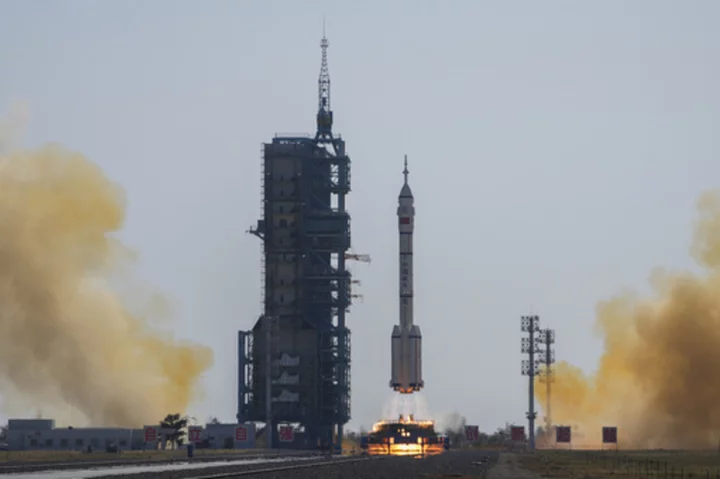
China sends its youngest-ever crew to space as it seeks to put astronauts on moon before 2030
China has launched its youngest-ever crew for its orbiting space station as it seeks to put astronauts on the moon before 2030
2023-10-26 13:22