
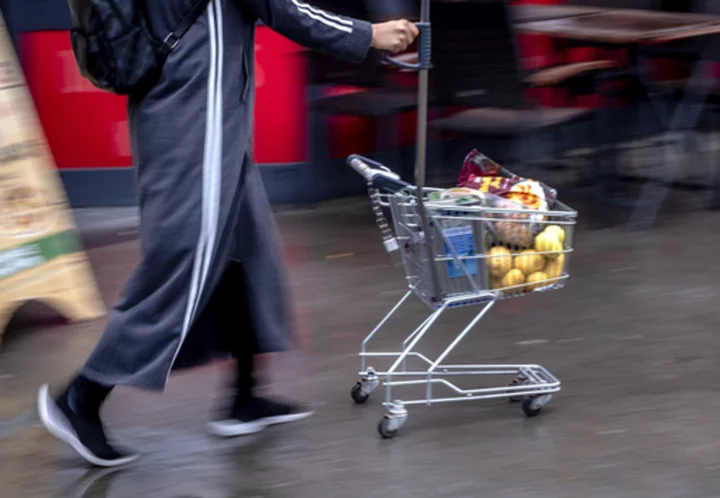
Europe's inflation held steady in August as European Central Bank keeps an open mind on rates
Inflation paused its decline in Europe in August
2023-08-31 17:24

UBS to cut 3,000 jobs after Credit Suisse takeover
The Swiss bank reports bumper profits following the rescue of its rival but staff face redundancies.
2023-08-31 17:19

How tall is Jennifer Lawrence? Actress towers over average American women
Jennifer Lawrence was named the world's highest-paid actress for two consecutive years - 2015 and 2016
2023-08-31 17:17

The USA is in great position entering Round 2 of the World Cup. So are many other teams
The opponent names will become more recognizable for USA Basketball now
2023-08-31 16:57

Irish fuel duty and hospitality taxes to increase
The increases, which come into effect from midnight, follow a number of temporary reductions.
2023-08-31 16:56

The future of Prosecco is at risk
Some of the world’s most celebrated wines – and the historic cultures of the communities which produce them – are under threat, scientists have warned. The harvesting of grapes on steep slopes is known as “heroic” viticulture – named so for the difficulty in producing fruitful harvests on such challenging terrain, typically without the use of mechanised tools, and many such vineyards across Europe have been designated Unesco world heritage sites. But researchers have warned that farmers and scientists must work together to protect this centuries-old tradition in the likes of Italy, Spain and Portugal, where climate change is threatening to disrupt the delicate equilibrium cultivated and maintained for generations. Scientists set out their concerns in a paper last month published in the journal iScience, warning that soil degradation and drought – such as those which devastated swathes of Europe last year – are the most worrying risks posed by climate change. Furthermore, the researchers from the University of Padova warned of a simultaneous threat posed by the “rural exodus and a gradual abandonment of mountain landscapes” which have “characterised” the past 50 years. “The new generation is not attracted to continue working under extreme conditions if economic benefits are insignificant,” they wrote, and warned that the technological modernisation of society is “degrading” the rural cultural background of previous generations. “The risk is not only losing an agricultural product or seeing a landscape change, negatively impacting the local economy,” said lead author Dr Paolo Tarolli and his co-writers. “The risk is losing entire communities’ history and their cultural roots.” Vineyards are considered “heroic viticulture” sites if they have a slope steeper than 30 percent, are located on small islands or at an altitude higher than 500 metres above sea level, or if they incorporate vines grown on terraces – conditions key to developing the wines’ prized flavours. Some of the most famous examples include the Prosecco Hills of Conegliano and Valdobbiadene, Portugal’s Alto Douro region, and the Spanish Canary Islands. The increased frequency of weather extremes driven by climate change accelerates soil degradation, the researchers warned, pointing to the ability of intense rainfall to “quickly trigger slope failures” without optimum water conservation processes. Meanwhile, prolonged droughts can threaten already difficult and costly irrigation processes on such slopes. “The key to success lies in combining the traditional knowledge of winemakers with innovation and scientific rigor,” the researchers said. “In this way, farms can work closely with scientists to optimise investments for a more functional, sustainable, and safe agricultural landscape – a winning alliance to face these diverse natural and anthropogenic challenges.” The warning came just days after researchers at the University of East Anglia and London School of Economics suggested that climate change is likely to increase the potential for UK wine production over the next two decades. Wine growing conditions in parts of the UK could grow to resemble those in famous growing regions of France and Germany, they suggested, with new areas in England and Wales finding they are able to grow varieties rarely found at present, including still pinot noir, sauvignon blanc and riesling. But, the study published in the journal OENO One also warned that British weather will remain unpredictable, and that producers will therefore need to remain “agile”. Read More Why climate change could be good news for UK wine ‘A new way of looking at whisky’: The rise of English distilleries Independent Wine Club fair weather friends: Wines for summer sipping Follow your tastebuds to find the hidden Algarve, a foodie’s paradise far from the madding crowd
2023-08-31 16:47

Rain and a wrong address delayed firefighters reaching a Philippine factory blaze. 15 people died
A fire has killed 15 people in a small apparel factory in a Philippine residential area, where flooding, traffic and a wrong address delayed firefighters
2023-08-31 16:28

Did Nina Agdal have an affair with Elon Musk? Dillon Danis goes after Logan Paul's fiancee again
'100k impression in 30 min isn’t exactly shadow banned,' a user wrote in reaction to Dillon Danis' post
2023-08-31 16:25

Palestinian trucker kills Israeli soldier in ramming, is shot
NILIN, West Bank A Palestinian truck driver killed an Israeli soldier and injured two others in a ramming
2023-08-31 16:24

Japan's Sogo & Seibu department stores are being sold to a US fund as 900 workers go on strike
Japanese retailer Seven & i Holdings Co. is selling department store chain Sogo & Seibu Co. to a U.S. investment fund, as the labor union went on strike ahead of the announcement
2023-08-31 16:22

Brightly Named an Industry Leader in Asset Investment Planning (AIP) Software by Independent Analyst Firm
CARY, N.C. & LONDON--(BUSINESS WIRE)--Aug 31, 2023--
2023-08-31 15:52

Abba's Agnetha Fältskog returns with solo song: 'I didn't know if I could do this'
In a rare interview, she discusses new music and the "strange" experience of watching her 3D avatar.
2023-08-31 15:51