
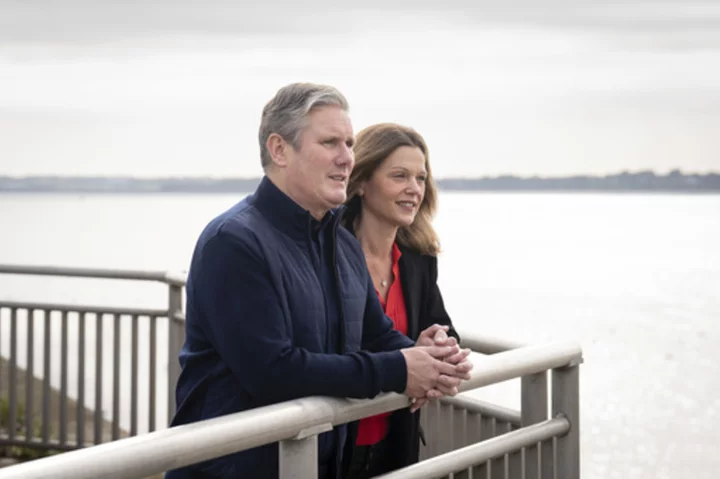
Labour Party leader Keir Starmer makes his pitch to UK voters with a speech vowing national renewal
U.K. Labour Party leader Keir Starmer is delivering that amounts to a public job interview for the post of prime minister
2023-10-10 16:19
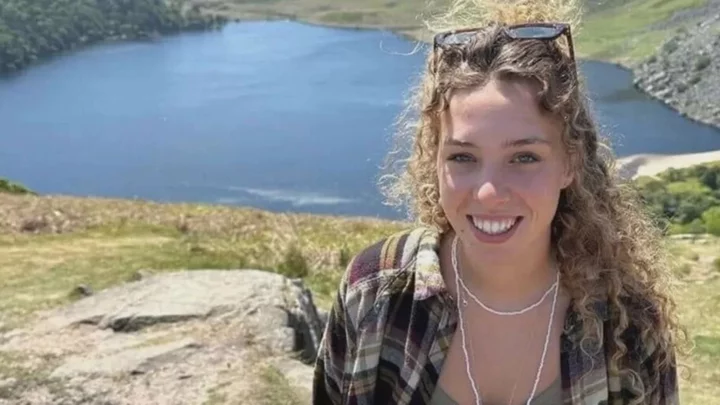
Missing Irish-Israeli woman's relatives 'only have hope'
Irish-Israeli woman Kim Damti, 22, has been missing since the Supernova music festival attack.
2023-10-10 15:50
Ukraine Recap: Drones Launched Against Three Southern Regions
Ukraine’s military said air-defense forces downed 27 out of 36 drones launched by Russia overnight against the southern
2023-10-10 15:22

Stock market today: Rate hopes push Asian shares higher while oil prices edge lower
Asian shares are higher after Wall Street advanced on potentially encouraging news about interest rates, which have been dragging markets lower since the summer
2023-10-10 15:22

Zainab Abbas: Pakistani cricket commentator leaves India after backlash
ICC said Zainab Abbas left India for personal reasons amid local media claims she was forced to go.
2023-10-10 14:47

Woke up to sounds of explosion: UK doctor in Gaza
British doctor Abdul Qadir Hammad was in Gaza a day before Hamas launched its deadly attack on Israel.
2023-10-10 14:17

Auto workers begin strike at GM plants in Canada
Auto workers have launched strikes at three General Motors facilities in Canada
2023-10-10 14:16

World Mental Health Day: 5 ways to beat anxiety and change your life
Anxiety is something that touches most of us, to a greater or lesser extent. Although it may just be a temporary blip for some people, for many, anxiety is a diagnosed condition that blights their lives. Indeed, Mental Health UK estimates more than one in 10 people in the UK are living with an anxiety disorder – that’s over eight million of us. And World Mental Health Day (October 10) is a chance to address the topic, agrees clinical psychologist Dr Kirren Schnack – author of the new book Ten Times Calmer: Beat Anxiety And Change Your Life. “It’s a reminder that mental wellbeing is just as important as physical health,” she says, pointing out that anxiety disorders are among the most widespread mental health issues globally. “Clinically, I’ve seen more and more people coming in with anxiety issue. The pandemic has played a significant role in this surge, introducing unprecedented levels of uncertainty, fear, and social isolation. At the same time, global economic instability and job losses have intensified stress and anxiety for many,” Schnack adds. “The widespread use of digital technology and social media has exposed people to a constant stream of alarming news and comparison-driven content that also feeds anxiety.” Schnack explains that anxiety disorders include generalised anxiety disorder (GAD), which causes chronic worry and hinders decision-making; health anxiety, where there’s an excessive preoccupation with diseases and illness; panic disorder, which is marked by sudden overwhelming panic attacks; and social anxiety, which leads to avoidance, isolation and low confidence. “They can blight daily life through physical symptoms, cognitive impairment, social isolation, disrupted routines, and emotional distress,” she says. Schnack suggests these five ways to combat anxiety problems and find calm… 1. Calm your stressed nervous system Anxiety places significant strain on the nervous system, Schnack explains, but there are simple daily practices that can help alleviate this stress. One is focusing on breathing, extending your exhale longer than your inhale. To do this, Schnack says you need to inhale gently through your nose, pause for a few seconds, then exhale slowly and deeply, ensuring an extended exhale. “A longer exhale helps by increasing the activation of the body’s parasympathetic nervous system, which counteracts stress hormones, lowers heart rate, and reduces overall physiological stress,” she says. She suggests around three to five of the breaths are repeated on multiple occasions throughout the day, and stresses that consistency is key. “Recognise that if anxiety has been a longstanding presence, it will take time and patience to restore your nervous system’s sense of safety and stability.” 2. Address anxious thoughts Schnack explains that anxiety often generates anxious thoughts that can seem like undeniable facts that are often dwelled on and reacted to, thus intensifying anxiety. “To break free from this cycle, it’s crucial to consciously confront and process these anxious thoughts,” she says. To do this, write a simple record, noting the date of your anxious prediction, describing what it was, and then, after a specified time like a day or two, return to what you’ve written and confirm whether the prediction was accurate by marking it as ‘yes’ or ‘no’. When the prediction doesn’t materialise, make a note of the actual outcome. Revisit the record, especially during anxious moments, and count the yes or no entries to reflect on your progress. “This practice trains your mind to adopt a broader, less anxious perspective,” explains Schnack. 3. Stop over-focusing on anxiety“People struggling with anxiety often find it challenging to shift their attention away from anxiety symptoms, leading to a persistent preoccupation that can worsen their problems,” says Schnack, who explains that this preoccupation can lead to excessive self-analysis, fixation on physical sensations or repetitive thoughts, and being hypervigilant. To shift your attention away from overwhelming anxiety, Schnack suggests trying this exercise: choose a colour, such as blue, and actively seek out blue objects in your surroundings. Name them out loud, and count them as you move around, possibly describing the item too. “Strive to maintain this focus for a few minutes, switching to different colours if necessary. Again, consistency is crucial, so make an effort to practice this regularly whenever anxiety hijacks your attention,” she advises. 4. Learn to tolerate uncertainty Recognising and addressing uncertainty is vital when dealing with anxiety, Schnack stresses. “You can’t resolve every uncertainty in life – the key lies in enhancing your ability to tolerate uncertainty so you can reduce your anxiety,” she explains. “Being more accepting of the fact that things may not always go as planned or that the future is uncertain can be incredibly liberating.” To help build resilience against uncertainty, Schnack advises people to take a moment to slow down and not immediately engage in reactive behaviour demanded by uncertainty, such as checking, Googling or avoiding things. Instead, she says, note your feelings, observing what uncertainty is doing to your mind and body, and write out an affirmation such as: ‘I’m feeling anxious because I’m uncertain about… My typical response to uncertainty is to engage in… behaviour. I recognise this only worsens my anxiety. My goal is to distance myself from anxiety rather than gravitate towards it. I can sit with the feeling of uncertainty for as long as I can, and build on this time until I get better and better at it.’ 5. Gradually face your fearsConfronting your fears is an effective way to overcome them, observes Schnack, although this can often feel overwhelming. “When you confront your fears, you’re essentially acting in opposition to your anxious thoughts and what anxiety is telling you. This process weakens anxiety’s grip on you, and when the actual outcomes don’t align with your anxious predictions, your mind can naturally adjust its thinking.” She suggests starting with small steps and gradually building up. So, for social anxiety, gradually start by saying a simple sentence or asking a basic closed question, and gradually building up from there. For health anxiety, gradually reduce and eliminate excessive online researching about illness and diseases, starting with small-time durations and then building on that. For panic disorder, gradually spend more time in places you typically avoid, starting with short durations like 30 seconds, then a few minutes, and gradually keep increasing the time. “Remember to repeatedly face your fears to make meaningful progress – it’s not just a one time thing,” adds Schnack. Ten Times Calmer: Beat Anxiety And Change Your Life by Dr Kirren Schnack is published by Bluebird, priced £16.99. Available now. Read More Alternative veg to grow for next season How to spot if your child is struggling with their mental health – and what to do next Does your pillowcase make a difference to your skin and hair health? Sarah Jessica Parker channels Carrie Bradshaw on the red carpet in mismatched shoes Does your pillowcase make a difference to your skin and hair health? As transphobic hate crimes rise by 11% in a year, how to be a better ally
2023-10-10 14:16
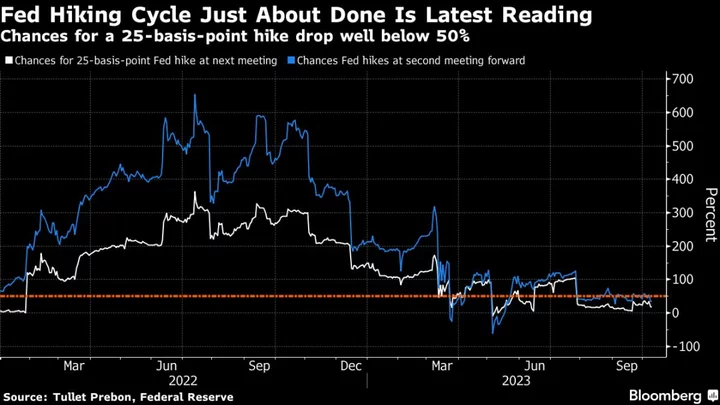
Treasuries’ Best Day Since March Driven by Signs Fed May Be Done
Bond investors are starting to bet the worst-ever rout in US Treasuries may soon be over. US 10-year
2023-10-10 13:59

Irish budget: Tax cuts and billions in increased spending
Updated plans for a sovereign wealth fund are also expected in Tuesday's budget.
2023-10-10 13:51

Liberia elections: Voters head to polls as George Weah faces Joseph Boakai
President George Weah is facing a strong challenge from the opposition in his bid for a second term.
2023-10-10 13:23

Largest study of centenarian blood reveals secrets to longevity
Centenarians tend to have lower levels of glucose, creatinine and uric acid from their sixties onwards, according to the largest study of its kind that may lead to a simple blood test to predict a person’s chance of reaching 100. The research, published on Monday in the journal GeroScience, is the biggest to date to measure and follow up the levels of different molecules in the blood of people born between 1893 and 1920. Scientists, including those from Karolinska Institutet, assessed the data on blood molecules from over 44,500 Swedes who underwent clinical testing between 1985 and 1996 and followed up till 2020. They focused specifically on people born between 1893 and 1920, who were between 64 and 99 years old when their blood samples were first tested, and followed them up as they grew closer to 100 years of age. About 1,200 individuals in the study, or about 2.7 per cent of the participants, reached 100. Researchers compared this subset’s data with those of their peers who were younger than them. The analysis found 12 blood-based molecules associated with metabolism, inflammation as well as liver and kidney function, that were also linked to ageing or mortality in previous studies. These molecules included total cholesterol and glucose as markers of metabolism, uric acid indicating inflammation levels, enzymes indicative of liver health and creatinine as a measure of kidney health. Researchers also looked at albumin and iron levels in the blood. Except for a liver enzyme and albumin, all other molecules were found linked to the likelihood of a person becoming a centenarian. Those with increased levels of total cholesterol and iron had a greater likelihood of becoming centenarians compared to those with lower levels. However, for molecules including glucose, creatinine, uric acid, and liver enzymes, lower levels were associated with higher chances of living past 100. “We found that, on the whole, those who made it to their hundredth birthday tended to have lower levels of glucose, creatinine and uric acid from their sixties onwards,” researchers wrote in The Conversation. “Very few of the centenarians had a glucose level above 6.5 earlier in life, or a creatinine level above 125,” they said. While the differences found in the study between groups were small in some cases, researchers said the findings still suggest a “potential link” between metabolism, nutrition and longevity. However, the study falls short of recommending lifestyle factors or genes responsible for these blood molecule levels. “While chance likely plays a role for reaching age 100, the differences in biomarker values more than one decade prior death suggest that genetic and/or lifestyle factors, reflected in these biomarker levels may also play a role for exceptional longevity,” scientists wrote in the study. “However, it is reasonable to think that factors such as nutrition and alcohol intake play a role. Keeping track of your kidney and liver values, as well as glucose and uric acid as you get older, is probably not a bad idea,” they said. Read More Good financial planning could increase life expectancy, study suggests Scientists find gene that grants long life – and successfully test it on another species Scientists extend mice lives by connecting their blood to young ones
2023-10-10 13:21