Supreme Court rules against Navajo Nation’s access to drought-stricken Colorado River, despite US treaty
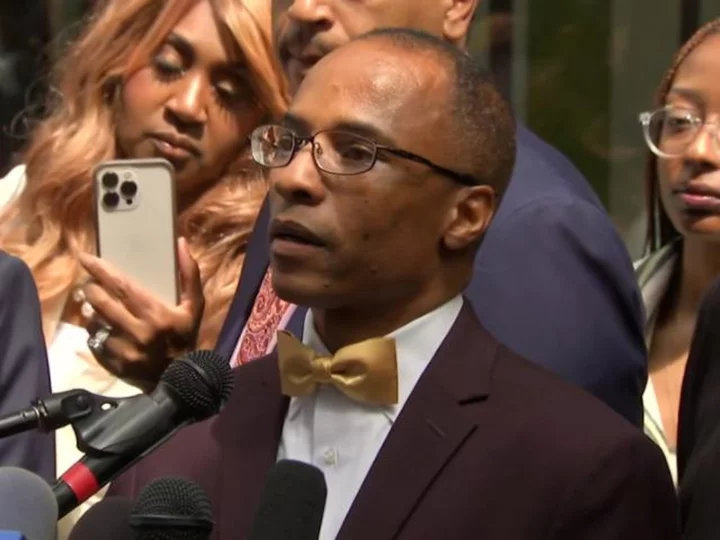
The Supreme Court ruled on Thursday against the Navajo Nation in a dispute concerning the tribe’s access to the drought-stricken Colorado River. Critics says the decision harms a community where an estimated one-third of tribal members lack running water and furthers the history of the US government breaking its promises to tribes. The case, Arizona v Navajo Nation, centres on the obligations of an 1868 treaty, which established the Navajo reservation as the tribe’s permanent home, following their forced removal from their ancestral lands by the United States military. The tribe argued that under the treaty, the US government has an obligation to evaluate the tribe’s need for water and factor that analysis into how it divides up water access to the Colorado River, which serves over 40 million people and passes through seven states. The US government, as well as the states of Arizona, Nevada, and Colorado, and various water districts in California, argued against the tribe in consolidated appeals. They claimed that the tribe’s interpretation of the treaty would undermine existing agreements on sharing the water from the Colorado and create and impose unsubstantiated obligations on the US government to develop water infrastructure for the tribe. In a 5-to-4 decision, all but one of the high court’s conservatives ruled against the tribe. “In light of the treaty’s text and history, we conclude that the treaty does not require the United States to take those affirmative steps,” Justice Brett Kavanaugh wrote in the majority opinion. “And it is not the Judiciary’s role to rewrite and update this 155-year-old treaty. Rather, Congress and the President may enact — and often have enacted — laws to assist the citizens of the western United States, including the Navajos, with their water needs.” The court’s three liberal justices, as well as the Trump-appointed Neil Gorsuch, an advocate for tribal rights, dissented. “The Navajo have waited patiently for someone, anyone, to help them, only to be told (repeatedly) that they have been standing in the wrong line and must try another,” he wrote in his dissenting opinion. He argued, alongside the tribe, that the Navajo weren’t forcing the US government to immediately start building water infrastructure or changing water claims on the river, but rather begin the process of fully accounting for what the nation needed. Navajo representatives criticised the ruling. "My job as the president of the Navajo Nation is to represent and protect the Navajo people, our land, and our future,” Navajo Nation president Buu Nygren said in a statement after the ruling. “The only way to do that is with secure, quantified water rights to the Lower Basin of the Colorado River.” With a population of about 175,000 and a land mass larger than West Virginia, the Navajo Nation is the largest US tribal reservation, and the Colorado River and its tributaries flow alongside and through the tribe’s territory. “The US government excluded Navajo tribal citizens from receiving a share of water when the original apportioning occurred and today’s Supreme Court decision for Arizona v. Navajo Nation condoned this lack of accountability,” John Echohawk, executive director of the Native American Rights Fund, one of the many Indigenous groups that filed briefs in support of the Navajo Nation, said in a statement. “Despite today’s ruling, Tribal Nations will continue to assert their water rights and NARF remains committed to that fight.” In 2003, the Navajos sued the federal government regarding access to the Colorado River, while the tribe has also fought for access to a tributary, the Little Colorado River, in state court. As The Independent has reported, many on the Navajo nation struggle for basic water access. “If you run out [of water] in the evening, you have to get up earlier the next day to make sure that there’s water for the kids to wash hands, brush their teeth, make breakfast,” Tina Becenti told The Independent. “It was time-consuming and took a lot of energy.” Tribes were cut out of initial deals made to allocate the water on the Colorado River, leaving many to rely on thousands of unregulated wells, springs, and livestock troughs that are spread across the reservation, which can pose a serious health risk. According to the Environmental Protection Agency, these sources may contain bacterial or fecal contaminants, along with unsafe levels of uranium and arsenic – a legacy of mining on Navajo land which began with the US military’s Manhattan Project for nuclear weapons in 1944 and continued until 2005. The fate of the Colorado River has become increasingly contentious, as the vital waterway dwindles under heavy demand and a changing climate. In May, following years of tense negotiations, Arizona, California, and Nevada agreed to cut their use of water from the Colorado in exchange for $1.2bn in federal funding, a last-minute compromise that staved off catastrophic impacts to agriculture, electricity generation, and water supplies to major cities like Phoenix and Los Angeles. The high court decision follows a ruling this month on another topic with a long and complicated history involving tribal groups: adoption. Last week, a 7-2 majority ruled to preserve the Indian Child Welfare Act, defending the law’s preference for the foster care and adoption of Native children by their relatives and Tribes, which was implemented following investigations that revealed more than one-third of Native children were being removed from their homes and placed with non-Native families and institutions, cutting off important family and cultural ties. Louise Boyle and Alex Woodward contributed reporting to this story. Read More Father of 13 dies in Colorado rafting accident after saving his children from danger Feds announce start of public process to reshape key rules on Colorado River water use by 2027 Nevada fight over leaky irrigation canal and groundwater more complicated than appears on surface Supreme Court rules against Navajo Nation in Colorado River water rights case Feds announce start of public process to reshape key rules on Colorado River water use by 2027 Vegas water agency empowered to limit home water flows in future
2023-06-23 09:21
New York governor dodges questions on who paid for her trip to wartime Israel
New York Gov. Kathy Hochul is refusing to disclose who paid for her to travel to wartime Israel last week for a self-described solidarity mission
2023-10-27 02:16
Protester burns Koran at Stockholm mosque on Eid holiday
By Marie Mannes and Louise Rasmussen STOCKHOLM (Reuters) -A man tore up and burned a Koran outside Stockholm's central mosque
2023-06-29 03:15
Gordon romps for 282 yards, 4 TDs, Oklahoma State outlasts West Virginia 48-34
Ollie Gordon II rushed for a career-high 282 yards and scored four touchdowns to lead Oklahoma State to a 48-34 victory over West Virginia
2023-10-22 07:56
No. 3 Arizona jumps 9 places in AP Top 25 behind Kansas, Purdue; James Madison ranked for first time
Kansas remained at No. 1 in the first Associated Press men's college basketball poll of the season
2023-11-14 02:18
Who is Jennifer Grant? Cary Grant’s daughter dispels rumors about his sexuality, says ‘he wasn’t flirtatious with men’
Jennifer Grant also addressed the speculation surrounding her father's sexuality in her memoir in 2011 but received hate mail for it
2023-07-06 15:51
Iran, Venezuela eye trade increase, sign petrochemical deal
By Deisy Buitrago and Vivian Sequera CARACAS (Reuters) -Iran and Venezuela want to increase bilateral trade to $20 billion, up
2023-06-13 08:28
Niue media guide
An overview of the media in Niue, including links to broadcasters and newspapers.
2023-08-23 18:19
Deadly dreams: record Everest season among most dangerous
Scaling Everest is always dangerous, but expedition organisers have warned that a combination of extreme weather, corner-cutting on safety, and inexperienced and "impatient" foreign climbers has resulted in one...
2023-06-09 11:51
Pope presides Way of Cross ceremony at youth festival
Pope Francis presided over a Way of the Cross reenactment at a Lisbon park on Friday before hundreds of thousands of flag-waving pilgrims, part of...
2023-08-05 03:27
Global Yields Climb as Traders Lean Toward Fed Hike by July
Amid a slide in global bonds, the Treasury market briefly restored the full pricing of Federal Reserve tightening
2023-06-08 06:45
A grad student 'full of dreams and hopes' was fatally struck by a police car. What an officer said about her later has sparked outrage from Seattle to Capitol Hill
An effervescent young woman with a bubbly laugh and a radiant smile. A stellar student on the cusp of earning her master's degree. A beloved daughter making her mark thousands of miles from home.
2023-09-21 14:48
You Might Like...
Striking actors vow resolve, studios balk at latest demands
Hedge Funds Pile Into Bullish Oil Wagers Amid Saudi’s Surprise Oil Cut
Messi lands in Florida ahead of Inter Miami move
Who was Anderson Cooper's mom? CNN host reveals late mother offered to serve as surrogate for his baby at 85
Israel's national 'Flag March' in Jerusalem rattles Palestinians
Thousands of pieces of unexploded ordnance found buried in ground at Cambodian school
Jonas Kaufmann battles back from infection in Claus Guth's 'Doppleganger'
‘Today’ host Al Roker's wins the internet with NSFW joke about superstar cousin Lenny Kravitz