
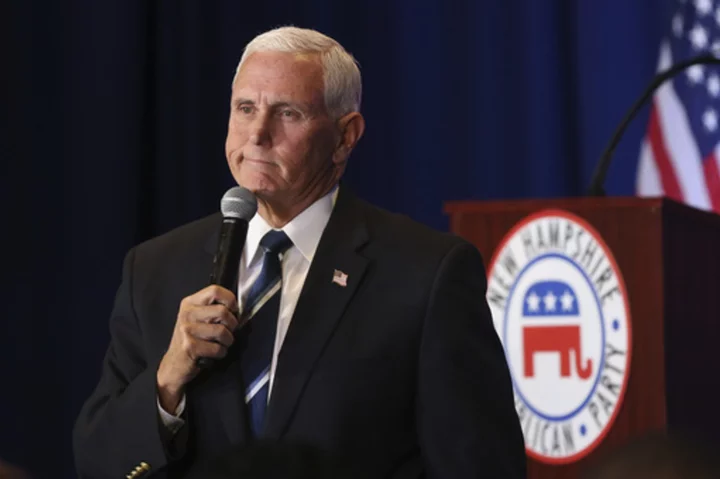
Mike Pence faces a cash shortage and questions about how much longer his 2024 campaign can survive
Former Vice President Mike Pence’s campaign is in dire financial straits
2023-10-21 02:23
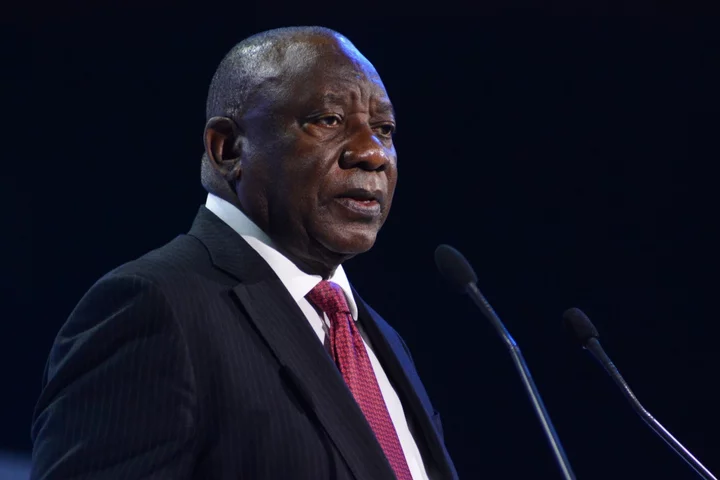
Less Spending Not Necessarily Way to Cut Deficit, Ramaphosa Says
South African President Cyril Ramaphosa said lower spending is “not necessarily” the answer to the country’s fiscal challenges,
2023-09-03 01:28
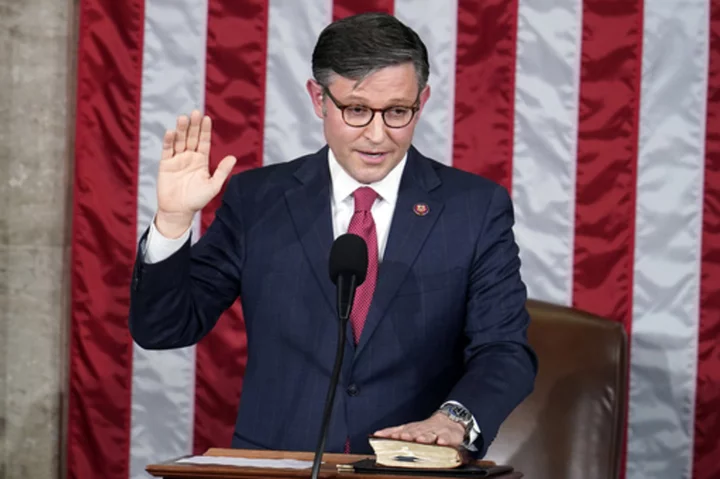
Christian right cheers new House speaker, conservative evangelical Mike Johnson, as one of their own
Evangelical Christian conservatives have long had allies in top Republican leadership in Congress
2023-10-27 23:28
‘Malibu sniper’ convicted of murdering California dad shot dead in camping tent
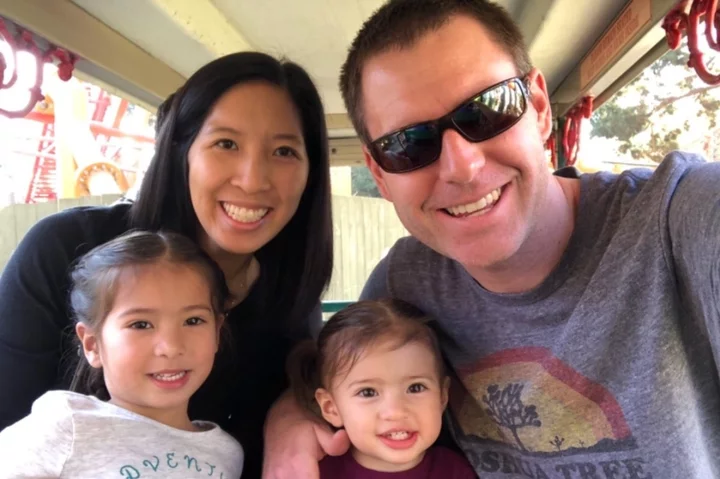
A man has been convicted in the murder of a scientist shot dead on a family camping trip while sharing a tent with his young daughters in a California state park. Anthony Rauda, 46, was found guilty of second-degree murder in the death of Tristan Beaudette, 35, who was fatally shot in June 2018 at Malibu Creek State Park. He was also convicted of multiple burglaries and three counts of attempted murder: two counts related to opening fire in the direction of Beaudette’s daughters and a third related to shooting a Tesla driver, the Los Angeles Times reported. The defendant, who has been convicted of attacking two sheriff’s deputies since his arrest in late 2018, declined attendance at trial but will be present for sentencing next month. Prosecutors painted a picture of Rauda’s “pattern of stalking and preying upon campers.” He had been charged with seven other counts of attempted murder but was acquitted this month after he could not be definitively tied to the scenes. Mr Beaudette had been sleeping in a tent with his daughters, aged two and four, in the early morning hours of 22 June 2018. when he was fatally shot in the head. During the trial, his brother-in-law emotionally described awaking to hear one of his niece’s crying and saying “Wet, wet,” ABC7 reported. He attempted to wake up his brother but found his own hand “covered in blood,” realising in shock that he should remove Mr Beaudette’s girls from the tent. “I noticed there was nothing in his eyes,” he said of his brother-in-law. Mr Beaudette, a research scientist from Irvine, “was the last of 11 people Rauda was accused of shooting at over the course of two years,” the LA Times reported. In several instances, Rauda shot at moving vehicles or at campers in hammocks, wounding people on more than one occasion, prosecutors said. “Most of the early attacks involved the use of what prosecutors described as an ‘improvised shotgun’ filled with pellets that did not cause anyone life-threatening injuries,” the paper reported, but the defendant “at some point upgraded to a sawed-off rifle, the weapon used in each of the counts he was convicted of Friday.” Prosecutors said that Rauda sought to kill victims in creative ways during his spree. “He’s actively trying to do something that you know would cause death when he researches how to blow up a car by shooting out a gas tank, and then you see that he shoots at a BMW,” LA County Deputy District Attorney Antonella Nistorescu said in closing arguments, according to the LA Times. Rauda is due in court on 7 June for sentencing. Mr Beaudette, who met his wife in high school, had been planning to move with his family to the Bay Area the week following the shooting. His widow, Erica Wu, filed a lawsuit against the sheriff’s department, State Parks and others following her husband’s murder, alleging authorities had failed to adequately warn the public at shootings in the area where Mr Beaudette was ultimately killed – but a judge in 2021 ruled against her. Read More British man left in Sudan shot by sniper before wife dies of starvation Mother-of-six killed in road-rage incident after driver shot into her moving car Family speak out after scientist dad shot dead on California camping trip with daughters, 2 and 4 On 1st anniversary of Uvalde, Texas, school shooting, Biden will push for more gun control
2023-05-28 02:16

'Sky's the limit' for Afghanistan's fearless generation
Afghanistan coach Jonathan Trott believes the "sky's the limit" for his young stars who shone and then shattered mighty Pakistan at the...
2023-10-24 09:48
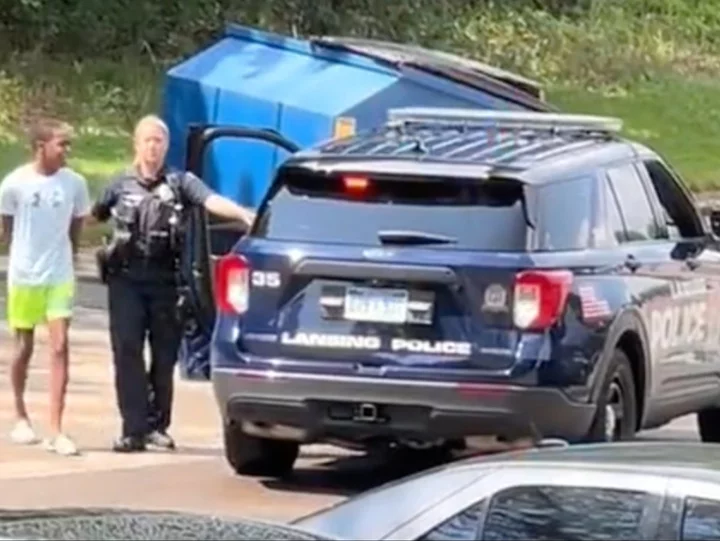
Michigan officials apologise after wrongly arresting 12-year-old Black boy in ‘unfortunate’ incident
The mayor and law enforcement officials in Lansing, Michigan are apologising to the family of a 12-year-old Black boy who was wrongfully arrested as a suspected car thief. Viral footage of the boy’s arrest on 10 August while he was taking out the trash from his home shows a white officer leading the boy through a parking lot with his hands cuffed behind his back. A lawyer representing the family told the Associated Press that the boy was initially approached by an officer with an unholstered gun “and was holding it in front of him”. The footage shows a man identified as the boy’s father, Michael Bernard, approaching the officer as the boy is brought to a patrol car and placed in the rear seat. Roughly three minutes into the video, officers remove the cuffs and walk him towards his father. “They trauamtised my son,” Mr Bernard can be heard saying in the video. The first of a series of statements issued by the Lansing Police Department called the incident an “unfortunate misunderstanding”. A second statement said the boy was released to his father “when eliminated as the accused.” Officials said that the boy was wearing the same clothes as a suspect in a vehicle theft investigation. “It’s unfortunate that incidents like this occur but through communication and sharing of information, we can help people understand the whole story. We understand that something like this has an impact on all parties involved,” Lansing police chief Ellery Sosobee said in the statement. “As the Chief of Police, I want to apologize that this incident had such an effect on this young man and his family,” he added. “I’m asking for the community to consider all the facts of the situation before making a judgment.” A statement from Lansing Mayor Andy Schor said police “made a mistake in detaining the wrong person during a vehicle theft investigation.” “I join Chief Sosebee in offering my apologies to the young man and to his family,” he added. Police remain “in contact” with the boy’s family and are “providing resources and support for any trauma” as a result of the incident, according to the mayor’s office. “Our officers do their absolute best to protect Lansing, but in this case a mistake was made and we own it and apologise to those affected,” he said. “As mayor, I once again offer my sincere apology to this young man.” Lawyers for the boy’s family are “exploring all legal options” including a potential lawsuit, attorneys Ayanna and Rico Neal said during a virtual press conference. The incident comes as the Detroit Police Department faces heightened scrutiny after a series of wrongful arrests of Black residents who were incorrectly targeted by facial recognition technology. Read More A Black woman says she was wrongly arrested at eight months pregnant. She’s suing over ‘mistaken’ face ID tech
2023-08-13 05:23
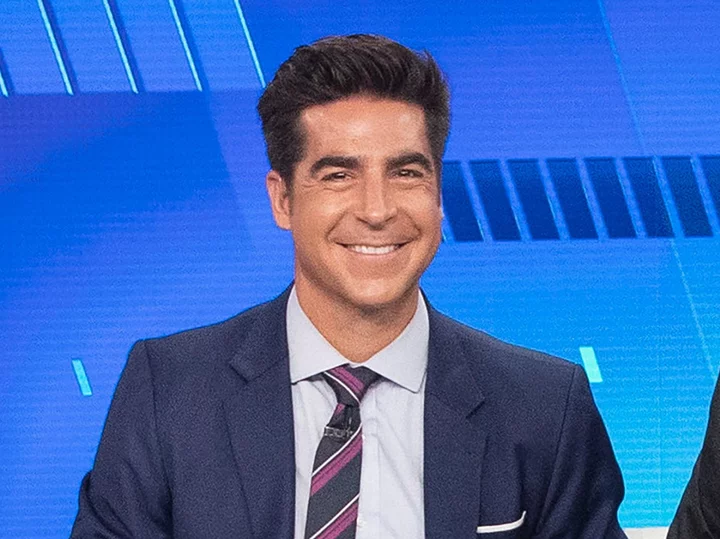
Jesse Watters chided by his own mother for ‘tumbling into conspiracy rabbit holes’ in his Fox primetime debut
Fox News host Jesse Watters received a lot of advice from his mother on air on the very first night of his show on the network in which he replaced a primetime slot previously hosted by Tucker Carlson. Watters’ mother has sent critical text messages to her son since 2017, when he became co-host of The Five. Later, producers introduced a segment called “Mom Texts” in which he regularly read aloud his mother’s texts to him. On his first night as Carlson’s replacement on the 8pm ET slot on 17 July, his mother started by congratulating him. “Congratulations, honeybun. We are so proud of you and your accomplishments ... Now let’s aim to have you keep your job. And to that end, I do have some suggestions,” she told her son on his Jesse Watters Primetime. “Do not tumble into any conspiracy rabbit holes. We do not want to lose you and we want no lawsuits, OK?” she said. Carlson, the previous regular 8pm Fox host, was fired by Fox News earlier this year after the network agreed to a $787.5m legal settlement with Dominion Voting Systems. The lawsuit filed by the company alleged Carlson and other Fox News personalities and their guests amplified bogus statemenets and conspiracy theories about the 2020 presidential election. “I want you to seek solutions, versus fanning the flames,” Ms Watters told her son. She told him to “use your voice responsibly, to promote conversation that maintains a narrative thread.” “There really has been enough Biden bashing. And the laptop [Hunter Biden’s laptop controversy] is old,” she added. “Perhaps you could suggest that your people take less interest, for example, in other people’s bodies, and talk about that,” she said, a likely reference to his ongoing segments ridiculing transgender people and his commentary on abortion. (Last year, Watters called a very real story about a 10-year-old girl who needed abortion care a ”hoax” and “politically timed disinformation”, then tried to take credit for putting “pressure” on the investigation after a suspect was arrested.) She also mocked Donald Trump by referring to him as “that Bedminster friend” of her son’s. “You could encourage that Bedminster friend of yours to return to his earlier career on television. Everyone in his audience could wear a red hat and I’m sure the ratings would soar, although never as high, my darling, as yours,” she said. Ms Watters also urged her son to take cognisance of the Hippocratic Oath – “do no harm” – and to “be kind and respectful”, even though she acknowledged that her son mentioned the idea of him being “humble” might be “a stretch”. Watters’ honed his reputation on the network with brash, offensive man-on-the-street interview segments and deliberately provacative commentary that has drawn widespread criticism and accusations of sexism, racism, homophobia, transphobia, and election denialism, including incendiary statements aired days before the attack on the US Capitol. Unlike Carlson, who arrived at Fox after on-air roles at competing networks, Watters is something of a Fox company man, moving up in the ranks over more than 20 years while adopting the hostile posture and talking points of some of its biggest stars, with a self-satisfied grin. Read More Far-right pundits and lawmakers evangelise and crown Trump and Tucker at Turning Point’s Florida conference US support for Ukraine emerges as key dividing line between GOP 2024 hopefuls in Tucker Carlson-hosted forum Tucker Carlson and Mike Pence clash in heated exchange over Ukraine at GOP 2024 forum Meet Jesse Watters, the Fox News host helming Tucker Carlson’s primetime slot He was a loyal Fox News viewer before he starred in a conspiracy theory. Now Ray Epps is suing
2023-07-18 22:24
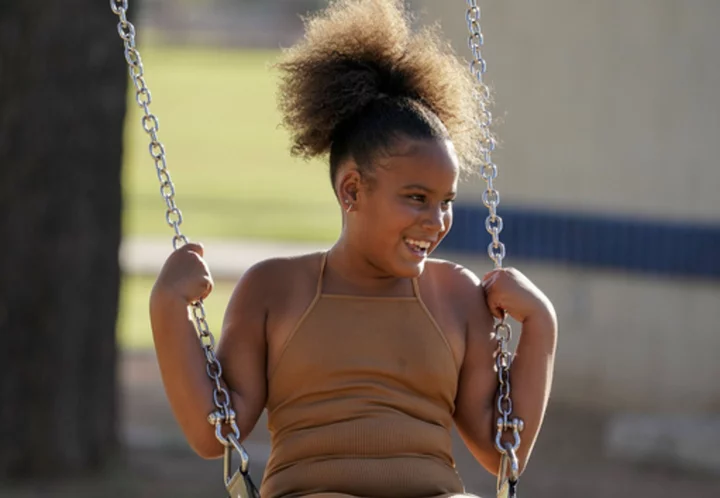
Schools lost track of homeless kids during the pandemic. Many face a steep path to recovery
Homeless kids often fell through the cracks during the tumult of the pandemic, when many schools struggled to keep track of families with unstable housing
2023-07-28 12:25

Louisiana's legislature sends ban on gender-affirming care for most minors to Democratic governor's desk
Louisiana's Republican-led legislature Tuesday passed a ban on gender-affirming care for most minors in the state, sending the bill to a Democratic governor who has signaled opposition to the legislation but faces a GOP supermajority with the numbers to override his veto power.
2023-06-07 03:51

Record storm cost up to 100 mn euros in damage: Dutch insurers
A record-breaking summer storm that pummelled the Netherlands and Germany, leaving two people dead, has caused as much as 100 million euros ($109 million) in...
2023-07-06 20:29

King Charles says 'no excuse' for colonial abuses during Kenya visit
"There were abhorrent and unjustifiable acts of violence committed against Kenyans as they waged... a painful struggle for independence and sovereignty," Charles said at a state banquet...
2023-11-01 03:45
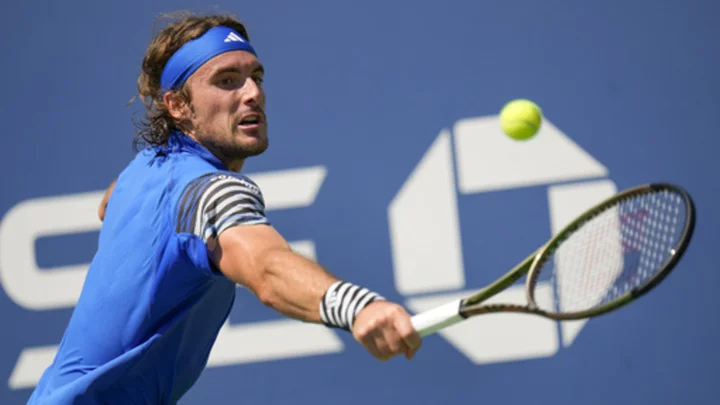
Tsitsipas latest upset victim at US Open, falling to 128th-ranked qualifier
Stefanos Tsitsipas became the latest upset victim at the U.S. Open, losing in the second round to Swiss qualifier Dominic Stricker 7-5, 6-7 (2), 6-7 (5) 7-6 (6), 6-3
2023-08-31 04:28
You Might Like...

TV series put on pause by the Hollywood writers strike

China’s Stubborn Manufacturing Slump Drags Down Rest of Asia
Andrew Tate advices to 'fight' despite a 'sinking heart', fans say 'never running away from your fears'
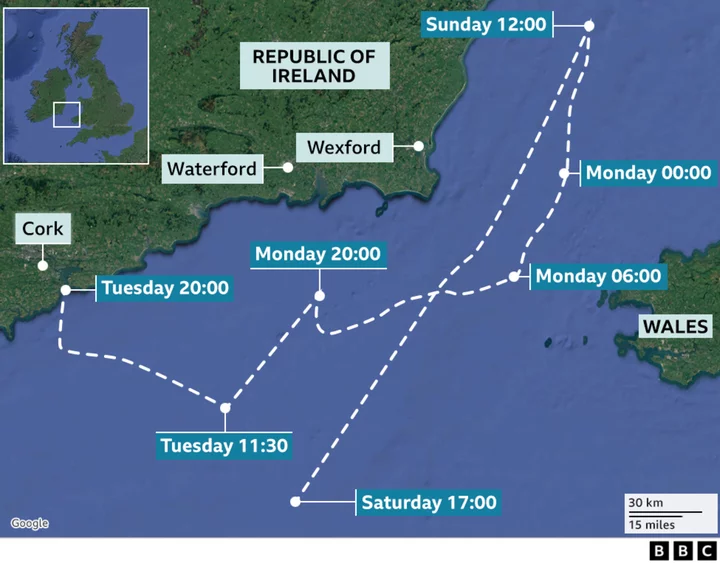
Largest ever Irish drug seizure after ship raided
US appeals court to weigh fate of abortion pill

BOE Governor Pushes Back Against Market Bets on Early Cuts
Tristan Tate embraces freedom post house arrest as haters repost old videos to prove him 'guilty', trolls say 'get out of the country'
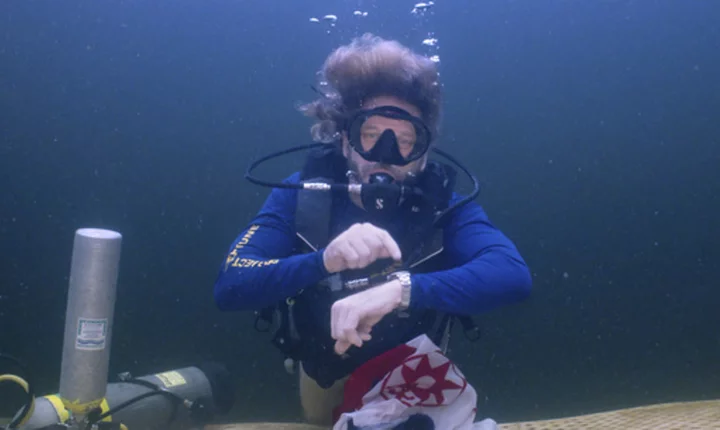
Florida's 'Dr. Deep' resurfaces after a record 100 days living underwater