J3N Provides the Latest and Most Up-to-Date News, You Can Stay Informed and Connected to the World.
⎯ 《 Just 3 N : New News Now 》
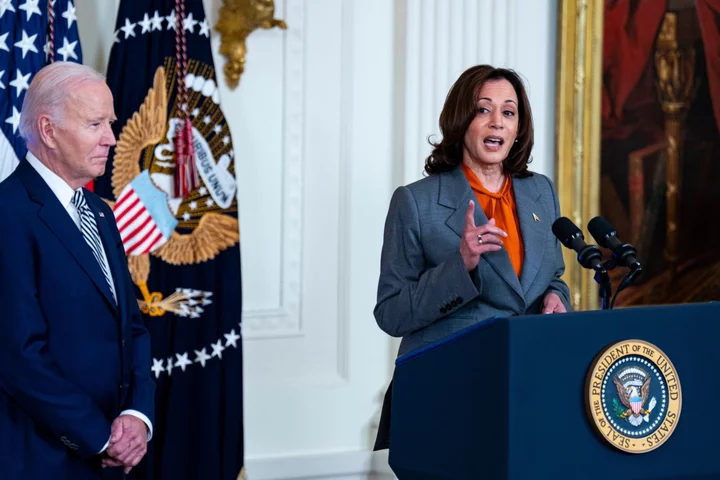
Planned Parenthood, Emily's List and NARAL-Pro Choice America endorse Joe Biden in 2024 race
Three top reproductive rights groups are endorsing President Joe Biden and Vice President Kamala Harris for reelection in 2024
2023-06-23 06:21
Half million youths give pope rock star welcome in Lisbon
Half a million young people chanted, cheered and shouted on Thursday as they packed a Lisbon park to give Pope Francis a rock star welcome at the official opening ceremony...
2023-08-04 03:48
Don’t Know What to Read Next? This Comprehensive Book Map Can Help
TheLibraryMap organizes 100,000 book titles in a way that’s visually pleasing and easy to navigate.
2023-10-27 05:47
Ukraine war providing lessons for Taiwan: Austin
Ukraine's war against invading Russian forces is providing lessons for Taiwan, showing how a smaller military can successfully defend against a larger one, US Defense...
2023-05-17 05:15
What is Shuttered Venue Operators Grant? Chris Brown, Post Malone and Lil Wayne among musicians given around $200M aid amid Covid
Chris Brown, Post Malone and Lil Wayne allegedly received millions of dollars of Covid relief each
2023-08-12 21:53
Citing sustainability, Starbucks wants to overhaul its iconic cup. Will customers go along?
Bethany Patton steps up to the counter and places her pink mug into a shoebox-sized dishwasher. It spins. It whirs. Water splashes inside. After 90 seconds, the door opens and steam emerges. A barista grabs the mug, dries it and prepares Patton’s order — a 16-ounce Starbucks double espresso on ice. For bringing her own cup, Patton gets $1 off her drink. “Saving the environment is important and all, but I probably come here more in knowing that I’m going to get a dollar off,” says Patton, 27, a cancer researcher at Arizona State University. Two friends who came on the afternoon coffee run nod as they hold the cups that they, too, brought along. Just as noteworthy as what they're carrying is what they are not: the disposable Starbucks cup, an icon in a world where the word is overused. For a generation and more, it has been a cornerstone of consumer society, first in the United States and then globally — the throwaway cup with the emerald logo depicting a longhaired siren with locks like ocean waves. Ubiquitous to the point of being an accessory, it has carried a message: I am drinking the world's most recognizable coffee brand. Now, in an era where concern for sustainability can be good business, the Starbucks disposable cup may be on its way to extinction thanks to an unlikely force: Starbucks itself. CONVENIENCE COLLIDES WITH VIRTUE By 2030, Starbucks wants to move away completely from disposable cups, which represent big portions of the company’s overall waste and greenhouse gas emissions. The stated reason is that it's the right thing to do for the environment, and Starbucks has a history of lofty sustainability goals around various aspects of their global operations. Some have been met, such as new stores being certified for energy efficiency; others have been revised or scrapped entirely. For example, in 2008 the company said that by 2015 it wanted 100% of its cups to be recyclable or reusable. Today, that's still a long way away. Today's drive to overhaul the cup comes with an obvious business imperative. Producing disposable products like cups creates greenhouse gas emissions, which warm the planet and lead to extreme weather events and other manifestations of climate change. That goes against customers' increasing expectations for companies to be part of the solution to climate change. Still, while customers want companies to be environmentally conscious, that doesn’t mean they’re willing to give up convenience. And there's this: Could eliminating the millions of paper and plastic cups used each year hurt Starbucks? After all, those cups, in the hands of customers, are advertising — a market penetration that makes Starbucks feel ubiquitous. At the store where Patton gets her coffee, Starbucks already doesn't serve any in disposable paper or plastic cups. Customers who don’t bring their own are given a reusable plastic one that can be dropped off in bins around campus. It’s one of two dozen pilots over the last two years, aimed at changing how the world’s largest coffee maker serves its java. The goal: to cut the company's waste, water use and carbon emissions in half by 2030. Pulling that off will be tricky and fraught with risks. It provides a window into how companies go from ambitious sustainability targets to actual results. “Our vision for the cup of the future — and our Holy Grail, if you will — is that the cup still has the iconic symbol on it,” says Michael Kobori, head of sustainability at Starbucks. “It’s just as a reusable cup.” Starbucks sees the change as an opportunity to cast the siren, and the company, in a different light. It also wants to push more suppliers in its production chain to provide recycled material and partners, such as universities and other locales that house stores, to be able to handle all that comes with reusable cups. Erin Simon, vice president for plastic waste and business at World Wildlife Fund, says commitment from major companies can help. But ultimately, she says, major change can happen only with corporate collaboration — and government regulation. “Not one institution, not one organization, not even one sector can change it on its own," Simon says. At Starbucks, the changes will create ripple effects. Jon Solorzano, a Los Angeles lawyer who advises companies on developing climate-friendly operations and disclosures, (an area referred to as “environmental, social and governance”), says the company likely has hundreds of suppliers that help manufacture cups. “It’s kind of like turning an aircraft carrier around,” Solorzano says. “Little tiny tweaks, which seem insignificant, can actually have big operational challenges for an organization." Starbucks is not the first company to push toward a reusable cup. From large companies in Europe, such as RECUP in Germany, which uses reusable cups and other food packaging, to local coffee houses in cities like San Francisco, the goal for years has been to shed disposable paper and plastic. But as the largest coffee company in the world, with more than 37,000 stores in 86 countries and revenues of $32 billion last year, Starbucks could force change across the industry. At the same time, failure to adapt and lead could hurt the coffee giant in customers' eyes. “I’ll always choose the more sustainable company,” says Irene Linayao-Putman, a public health worker from San Diego who recently bought Starbucks while visiting Seattle. The road to overhauling the container transcends just making a different choice or spending money. Improving sustainability requires navigating a web of technological developments, seeking out like-minded suppliers and testing how far customers can be pushed to change. For Starbucks, it means doing two major things in parallel that seemingly conflict: Move toward only reusable cups while developing disposable cups that use less material and are more recyclable. And managing the optics along the way. “They are just trying to get more buyers,” 10-year-old Aria June said with a laugh after buying Starbucks in Seattle. Then, prodded by her father, she added that sustainability and getting more business could co-exist. THE MECHANICS OF REUSE At the Arizona State store, if customers don’t bring their own cup, they are given a reusable plastic one with a Starbucks logo. If they bring it back, they get $1 off, just like customers who bring their own. And if they don't want to hold onto it? There are bins around campus, and the cups are washed by the university — part of a partnership with Starbucks — and returned to the store. Cups too damaged to be reused, along with disposable Starbucks cold drink cups and other plastic found in the trash, are sent to the university’s Circular Living Lab. They're shredded, melted and extruded into long, lumber-like pieces. Those pieces are cut, sanded and built into boxes, which become the return bins for the reusable cups. “This obviously has some energy and production costs, but using recycled content is always going to be less energy intensive (and) emit less CO2 than using virgin plastics,” says Tyler Eglen, the lab's project manager. For several years, Starbucks has been increasing the amount of recycled material in disposable paper cups. In some markets last year, Starbucks began using single-use paper cups made with 30% recycled material, an increase from 10%. The plan is to have all cups at 30% recycled material in in all U.S. stores starting in early 2025. That pushes the limits of what can be done with recycled paper material that holds hot liquids. Paper pulp from recycled cups has shorter fibers than virgin pulp, which means less rigidity, important particularly with hot coffee. How much recycled material can be used in manufacturing new cups depends on how equipped any particular area is to gather material and recycle it. Big cities have major recycling infrastructure, but many communities around the world have little to no recycling capacity. Another barrier: the lining inside the cup, crucial to keeping a hot liquid from quickly breaking down the paper. Made of polyethylene, a heat-resistant plastic, the liner is about 5% of the total cup but a significant piece of its overall carbon footprint. There is also the plastic lid. “Today, the reality is that for protection, as we put a hot beverage inside, we need a good seal on those cups," says Jane Tsilas, Starbucks’ senior manager for packaging. A similar testing and refining process is happening with disposable cold-drink cups. At the Tryer Center innovation lab in Starbucks' Seattle headquarters, drinks with ice in plastic cups are placed in holders attached to a platform. It then shakes as technicians look for leaks and flaws. For the last several years, Starbucks has been testing different kinds of plastics. In 2019, the company went to a strawless lid, eliminating a good amount of plastic. By the end of 2023, the goal is to reduce by 15% the amount of material in each cup. To do that, technicians examine different parts of the cup to see where less material may be used without weakening it. For example, could reducing the thickness where many people hold the cup, about halfway between the middle and lid, mean the cup collapses and the drink spills on the customer? "If it passes tests with baristas, then we would put it in the stores,” says Kyle Walker, a packaging engineer on Starbucks' research and development team. NOT AS EASY AS IT MIGHT SEEM Eventually, the endpoint is this outcome, which is more sustainable and good PR, too: No more disposables at Starbucks. That's because no matter the tests or technological innovations, there are limits to how much waste can be reduced with disposable paper and plastic cups. Long-term reductions in waste will come from reusable cups. The company has a long way to go. Since the reintroduction of reusable cups in some stores in July 2021 — reusable cups were not used during much of the COVID-19 pandemic — only 1.2% of worldwide sales in fiscal year 2022 came from reusables. Starbucks refused to provide data on how many disposable cups it uses in any given year. For all the talk of sustainability and increasing consciousness about climate change, it’s fair to assume that a significant number of Starbucks’ disposables end up in landfills. Even in Seattle, a progressive city with good recycling infrastructure, there are many cups in garbage cans outside Starbucks stores. Valencia Villanueva, a barista at the Arizona State store, has noted a growing consciousness among customers about the cup-washing machine and the “borrowed” cup program. That gives her confidence that the future is reusable cups. After all, it's not as if anyone is clamoring to be wasteful — even if what they're giving up is an item that became something of a global status symbol. “Nobody," she says, “has complained and said they wanted a single-use cup.” ___ Peter Prengaman is news director of The Associated Press' climate and environment team and can be followed here. Video journalist Manuel Valdes in Seattle contributed to this report. ___ AP climate and environmental coverage receives support from several private foundations. See more about AP’s climate initiative here. The AP is solely responsible for all content. Read More Ukraine war’s heaviest fight rages in east - follow live Charity boss speaks out over ‘traumatic’ encounter with royal aide Citing sustainability, Starbucks wants to overhaul its iconic cup. Will customers go along? From piñata to postage stamp, US celebrates centuries-old Hispanic tradition Starbucks cheers ‘good progress’ in plan for 100 new UK shops
2023-09-15 13:59
Who is Anthonie Ruinard? Parker League's murder suspect arrested 3 weeks after slain teen’s body found in bonfire pit
Ruinard is expected to face charges of first-degree murder in connection with League's death
2023-07-08 17:17
Dallas police arrest suspected serial killer they believe murdered three women
Dallas police have arrested a man they believe killed three women whose bodies were found over three months in the city. Oscar Sanchez Garcia, 25, was charged with two counts of murder in the deaths of Kimberly Robinson, 60, and an unidentified woman, according to the Dallas Police Department. He is also the main suspect in the slaying of a third woman, Cherish Gibson, 25. Mr Sanchez Garcia is being held on a $4m bond at the Dallas County Jail. Robinson’s body was found on 22 April 22 in a grassy area under a SART train bridge in the city. Gibson’s body was found on 24 June on the same block near the DART station. The third victim was found on Saturday less than five miles from where the other two bodies were located. An arrest warrant affidavit obtained by WFAA states that police linked the suspect to the killings using phone records, video and data from a licence plate reader that put his vehicle and phone in the areas where all three victims were last seen alive and where their bodies were found. The bodies of both Robinson and Gibson, who are both thought to have been working as sex workers, were both found partially undressed with stab injuries. Investigators say a blue Ford Truck with “distinct stickers on the rear windshield” was seen at all locations and was registered to the suspect, who lived near where the bodies of Gibson and Robinson were discovered. Christina Martinez told the news station that she has known Mr Sanchez Garcia and his family for two years and lives in the same triplex building. “He’s a calm guy, chilling guy,” she said. “He likes to play with the kids. That’s why we were like in shock.” Ms Martinez added that the suspect’s wife was in “shock” following his arrest. “She’s in shock. And the son is just asking for his daddy. She doesn’t know what to tell him. He does not look like that person that would do something like that.” It is not the suspect’s first interaction with police in the city. Records show that in March the suspect was arrested for allegedly punching his wife twice in the face after she used his bank card to buy diapers without asking, reported WFAA. Robinson’s daughter, Janetria Oliver, says she is grateful that an arrest has been made in the case. “My mother did not deserve that, and I’m so glad that he’s off the streets where he won’t be able to hurt anyone else,” Ms Oliver said. “I’ve also been praying for the other families involved. No one deserves for their life to be cut short like that, and we pray that full justice is served.” Read More Person of interest in Portland serial killer case fought his way through ‘10 officers’ before arrest, witness says Portland ‘serial killer’ – live: Jesse Calhoun’s ‘girlfriend’ reveals his relationships to two of the victims Gilgo Beach murders suspect Rex Heuermann tells jail officials he ‘won’t be an issue to them’ Woman claiming to be girlfriend of person of interest in Oregon deaths reveals alleged links to victims Mothers of women in Portland ‘serial killer’ case cling to hope of accountability
2023-07-21 08:26
The UN refuses to retract its condemnation of Israel over the Jenin military operation
Israel’s United Nations ambassador is calling on Secretary-General Antonio Guterres to retract his condemnation of the country for its attack on the Jenin refugee camp
2023-07-08 11:21
How much did Kai Cenat get paid for doing promos? Streamer says 'it was crazy'
Kai Cenat dished about his early beginnings in streaming and a lucrative promotion deal he got his hands on in an interview
2023-07-22 17:23
Biden calls for GOP help on gun violence, praises police for work in Maine shooting spree
President Joe Biden has called on Republicans in Congress to help keep American people safe from gun violence and praised police for their efforts to track down the Maine gunman who killed 18 people
2023-10-28 13:50
Trump faces federal charges for efforts to overturn 2020 election
By Sarah N. Lynch, Jacqueline Thomsen and Andrew Goudsward WASHINGTON Donald Trump was indicted on Tuesday for his
2023-08-02 09:57