

Ukraine drone attack damages Russian tanker near Crimea
Ukraine carried out a drone strike overnight on a Russian tanker in the Kerch Strait, a day after one of Moscow's ships was hit in the Black Sea, a Ukrainian...
2023-08-05 22:19

Hurricane Hilary to trigger floods in Baja California peninsula, southwestern US - NHC
MEXICO CITY (Reuters) -Hurricane Hilary was barreling towards Mexico's Baja California peninsula on Saturday, a U.S. government agency said, warning
2023-08-20 07:45

Why did Rob Lowe quit 'The West Wing'? Actor discloses reason he left award-winning political drama after Season 4
Rob Lowe's absence from 'The West Wing' was initially portrayed as an 'amicable' professional choice on the actor's part
2023-08-10 15:58
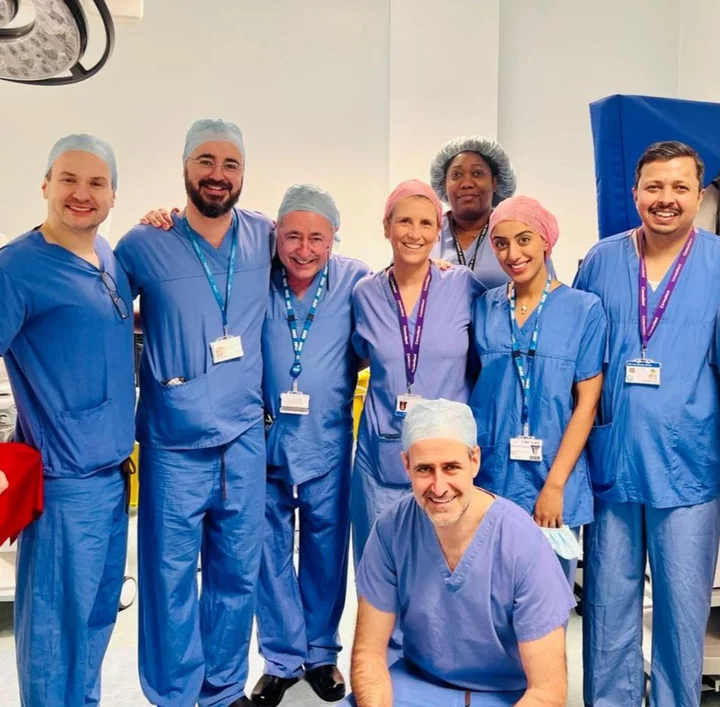
How did surgeons carry out Britain’s first womb transplant?
Surgeons worked all day and into the night to ensure Britain’s first womb transplant went smoothly. Its success is down to meticulous research, years of sharing knowledge between experts around the globe, and the hard work and dedication of doctors Professor Richard Smith, from Imperial College London, and Isabel Quiroga, from the Oxford Transplant Centre. Around 50 babies have been born worldwide as a result of womb transplants, which give women missing a functioning uterus a chance to have a baby. In the first UK case, the operation to remove the womb from the recipient’s 40-year-old sister lasted eight hours and 12 minutes, with surgeons leaving her ovaries behind to prevent pushing her into early menopause. One hour earlier, surgeons began operating on the 34-year-old recipient, preparing her body to receive the donated organ. This operation lasted nine hours and 20 minutes, with the surgical team experiencing some difficulties including a higher-than-expected blood loss of two litres. However, after just 10 days, the recipient was well enough to leave the hospital and has continued to have a good recovery. She is also having regular periods, which shows the womb is working well. Her sister was discharged five days after her donor operation and has also made a good recovery. Removing a womb is a similar operation to a radical hysterectomy, according to Prof Smith, who as well as being a gynaecological surgeon is the clinical lead at the charity Womb Transplant UK. He and Miss Quiroga led the team of more than 30 staff who worked on the transplant one Sunday in February. Prof Smith and Miss Quiroga removed the older sister’s womb, cervix and fallopian tubes, plus crucial blood vessels around the organ. The main vessels are the uterine arteries running into the womb, but the surgeons also aimed to collect some of the larger internal vessels that lead into the smaller branch of the womb. Prof Smith said surgeons doing these operations have to retrieve veins involved in the drainage of the womb. “One of the amazing things is that my surgical skill-mix as a cancer surgeon is to remove organs with a margin of normal tissue, while sealing the vessels as I go,” he said. “Transplant surgical skills are different – that is to remove a normal organ with the best number of non-sealed vessels as you can. “Isabel and I operate together with no ego – it just flows backwards and forwards across the table.” He added: “The day itself was truly humbling. We turned up at 7am at the Churchill transplant centre with the donor and the recipient families, then we went into a pre-op huddle. Those in the huddle included surgeons, nurses, anaesthetists and technicians. Prof Smith and Miss Quiroga worked to remove the womb, before the organ was prepared for transplantation by a “back table” team. “This was an organ which had a very, very unusual blood supply,” Prof Smith said. “In fact, it had a set of blood vessels which I’ve never seen in my entire career. They made my dissection a bit harder than it might have been, but we got there.” In the theatre next door, one hour before the retrieval of the womb was completed, surgeons began to operate on the donor’s younger sister to enable her to receive the womb. Prof Smith and Miss Quiroga switched from donor to recipient and Prof Smith removed the vestiges of the underdeveloped womb the recipient was born with. Meanwhile, the organ was packed and transported between the two theatres under sterile conditions to prevent contamination. A sterile bag with a cold perfusion solution contained the womb, which was then placed into a container with ice. During surgery, ligaments attached to the womb were attached to the recipient to help the womb stay in a relatively fixed place so it does not move around the pelvis. The most important part of the transplant operation was the joining of the very small vessels that give the blood supply to the womb. This was the most delicate and difficult part of the operation and was led by Miss Quiroga. Once all the vessels were connected, the donor’s vaginal cuff – around a 1cm part – was stitched into her sister’s vagina. If and when the recipient is able to complete her family, the womb will be removed six months later to prevent her from needing immunosuppressants for the rest of her life. Prof Smith said: “We know that the chance of failure at the point where the uterus goes in – if you look at the world literature – is 20 per cent to 25 per cent. And that failure is usually on the basis on sepsis and thrombosis. So technically, we are up to the job, but what happens thereafter can be scary. “Once you get to three or four days later, the chance of failure drops to probably less than 10 per cent. “Once you get to two weeks – and at the point where the woman has a period – the chance of her having a baby at that point is very high and the chance of failure has dropped to low. But those first two weeks – it’s very scary as a surgeon to watch and wait.” Biopsies to check the womb was functioning were read in London but then also confirmed by an expert team in the US at Baylor University Medical Centre in Dallas, where other womb transplants have been performed. Prof Smith said the procedure gives new hope to women born with devastating conditions. He said: “You’ve got girls, maybe 14, who have not had periods, they go to the GP and a scan shows there is no uterus. Absolute catastrophe. “Up until now, there’s been no solution for that, other than adoption or surrogacy... That’s not the case now. It’s really exciting.” On whether transgender women may also benefit from the operation, Prof Smith said that was still a long way off. He said the pelvic anatomy, vascular anatomy and shape of the pelvis are different, and there are microbiome issues to overcome. “My own sense is if there are transgender transplants that are going to take place, they are many years off. There are an awful lot of steps to go through. My suspicion is a minimum of 10 to 20 years.” Miss Quiroga said the living donor programme to date in the UK has focused on women with relatives who are willing to give their wombs. “It will come to a point where we will have friends or altruistic donors, like we have with many other transplants, but at the moment we’re only focused on people who have come forward with relatives,” she said. Read More Bursts of activity that make you huff and puff ‘linked to reduced cancer risk’ Fiona Phillips, 62, reveals she has Alzheimer’s disease Woman has all her teeth removed after rare vomiting condition causes them to fall out Bursts of activity that make you huff and puff ‘linked to reduced cancer risk’ Fiona Phillips, 62, reveals she has Alzheimer’s disease Woman has all her teeth removed after rare vomiting condition causes them to fall out
2023-08-23 07:19

Meta Loses Court Fight Over EU Hunt for Antitrust Evidence
Meta Platforms Inc. lost a court fight with European Union regulators who demanded vast amounts of data to
2023-05-24 18:58

102-loss Royals have turned out to be quite the spoilers against playoff-chasing Astros
The Kansas City Royals have lost more than 100 games this year
2023-09-25 22:59

Finns Party: Far-right set for key role in new Finnish coalition
The Finns Party agree to enter a four-party coalition but will seek drastic cuts to immigration.
2023-06-16 17:18

Frances Sternhagen, Tony Award-winning actor who was familiar maternal face on TV, dies at 93
Frances Sternhagen, the veteran character actor who won two Tony Awards and became a familiar maternal face to TV viewers later in life in such shows as “Cheers,” “ER,” “Sex and the City” and “The Closer,” has died
2023-11-30 04:21

Fans slam Kourtney Kardashian as 'The Kardashians' star jets off to Hawaii for babymoon without children: 'Doesn’t take care of the kids she’s got'
Kourtney Kardashian flaunted her growing pregnancy while basking in the sun on a Hawaiian beach
2023-07-13 08:56

‘It was a burden’: Tom Hanks reveals how he had to gain and then lose 50 lbs for ‘Cast Away’
Tom Hanks is a master of transformation but some of his roles have been grueling and have taken a toll on his health
2023-06-14 14:46

Coach faces questions with Australia 'teetering' at World Cup
Australia coach Tony Gustavsson was facing questions on Friday after a stunning 3-2 defeat to Nigeria left the Women's World Cup co-hosts "teetering on the...
2023-07-28 11:24
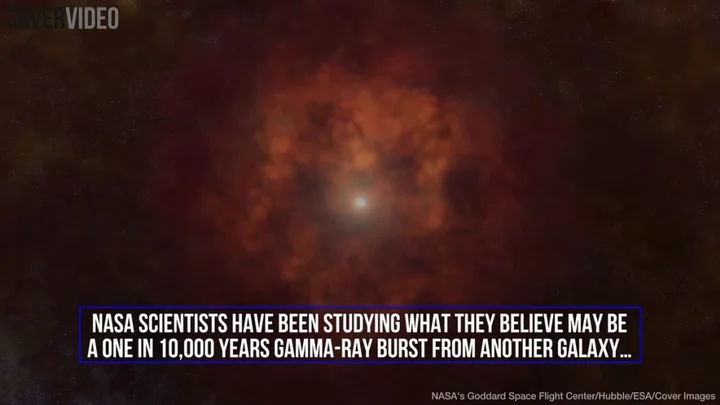
Astronomers discover a totally new way that stars can die
Astronomers have discovered a new way that stars can die. In a study published in the journal Nature Astronomy, experts have worked out that a minute-long gamma-ray burst of light, which occured in 2019 and evidence a star dying, happened because stars collided within the densely crowded environment near the supermassive black hole at the centre of an ancient galaxy. Normally gamma-ray bursts (GRB) last around two seconds and happen when stars collapse. “For every hundred events that fit into the traditional classification scheme of gamma-ray bursts, there is at least one oddball that throws us for a loop,” said study coauthor Wen-fai Fong, assistant professor of physics and astronomy at Northwestern University’s Weinberg College of Arts and Sciences, in a statement. “However, it is these oddballs that tell us the most about the spectacular diversity of explosions that the universe is capable of.” Over time, astronomers have observed three main ways that stars can die, depending on their size. Lower mass stars like our sun shed their outer layers as they age, eventually becoming dead white dwarf stars. Sign up to our free Indy100 weekly newsletter Massive stars burn through the fuel-like elements at their core and shatter in explosions called supernovas. Doing so can leave behind dense remnants like neutron stars or result in the creation of black holes. A third form of star death results when neutron stars or black holes begin to orbit one another in a binary system and spiral closer to one another until they collide and explode. But the new observation suggests a fourth type of death. “Our results show that stars can meet their demise in some of the densest regions of the universe, where they can be driven to collide,” said lead study author Andrew Levan, an astrophysics professor at Radboud University in Nijmegen, Netherlands, in a statement. “This is exciting for understanding how stars die and for answering other questions, such as what unexpected sources might create gravitational waves that we could detect on Earth.” “The lack of a supernova accompanying the long GRB 191019A tells us that this burst is not a typical massive star collapse,” said study coauthor Jillian Rastinejad, a doctoral student of astronomy at Northwestern, in a statement. “The location of GRB 191019A, embedded in the nucleus of the host galaxy, teases a predicted but not yet evidenced theory for how gravitational-wave emitting sources might form.” “While this event is the first of its kind to be discovered, it’s possible there are more out there that are hidden by the large amounts of dust close to their galaxies,” said Fong, who is also a member of the Center for Interdisciplinary Exploration and Research in Astrophysics at Northwestern. “Indeed, if this long-duration event came from merging compact objects, it contributes to the growing population of GRBs that defies our traditional classifications.” You learn something new every day. Have your say in our news democracy. Click the upvote icon at the top of the page to help raise this article through the indy100 rankings.
2023-06-26 19:27
You Might Like...

Paige Spiranac's fans extend support as she claps back at wardrobe critics, says ‘my body, my choice’

Erdogan links Sweden's NATO membership to Turkey's EU accession

China Weighs Ending Freeze on Boeing With 737 Max Deal in US

Trump business empire under threat as New York fraud trial opens

Ted Kaczynski, known as the 'Unabomber,' dies
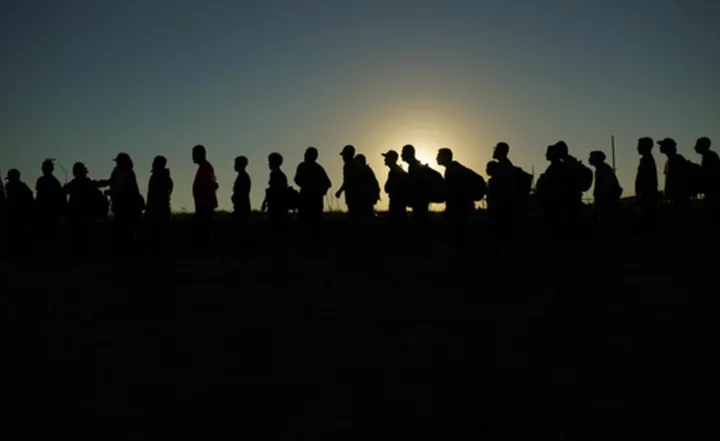
Mexico says it has rejected US-funded migrant transit centers

Chinese AI firm SenseTime denies research firm Grizzly's claim it inflated its revenue

Jake Paul teases next bout against ‘boxer with a winning record’ via promo company MVP