
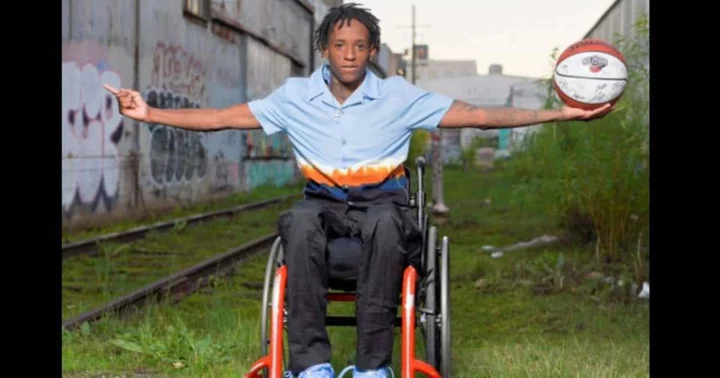
Speedy: Here's why 'Queer Eye' reality star might be the new TikTok sensation
Speedy from 'Queer Eye' is inspiring many TikTok users and might be a new sensation on the app
2023-05-20 17:55
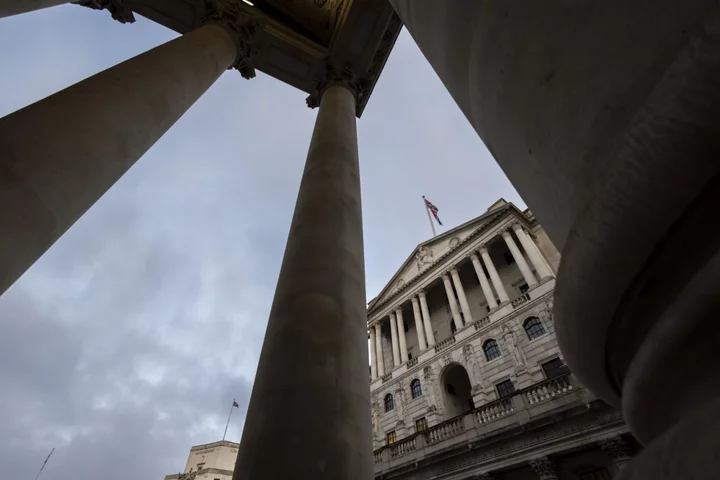
BOE Unveils Stress Test Plan for Dozens of Banks, Asset Managers
The UK’s largest banks and asset managers will be tested against a hypothetical shock worse than last year’s
2023-11-10 18:24
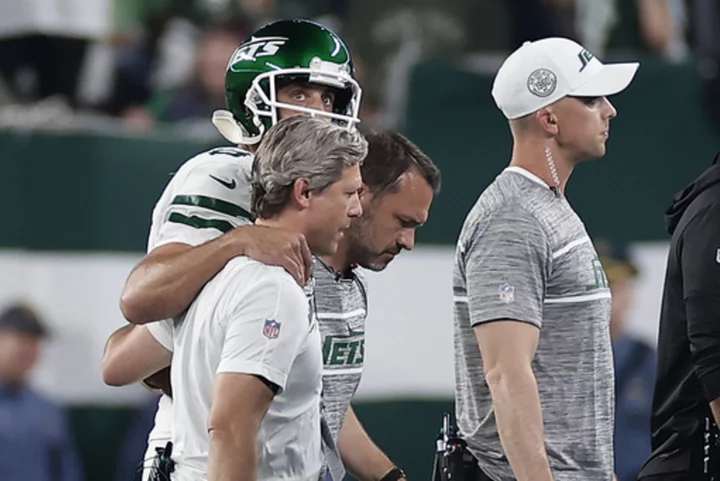
Jets QB Aaron Rodgers has torn left Achilles tendon, AP source says. He's likely to miss the season
A person familiar with the diagnosis says New York Jets quarterback Aaron Rodgers has a torn left tendon
2023-09-12 23:55

Australian consumer watchdog calls for record fine against Qantas over canceled flights
Australia’s consumer watchdog has called for Qantas Airways to be punished with a record fine for allegedly selling tickets on thousands of flights that had already been canceled
2023-09-01 12:19
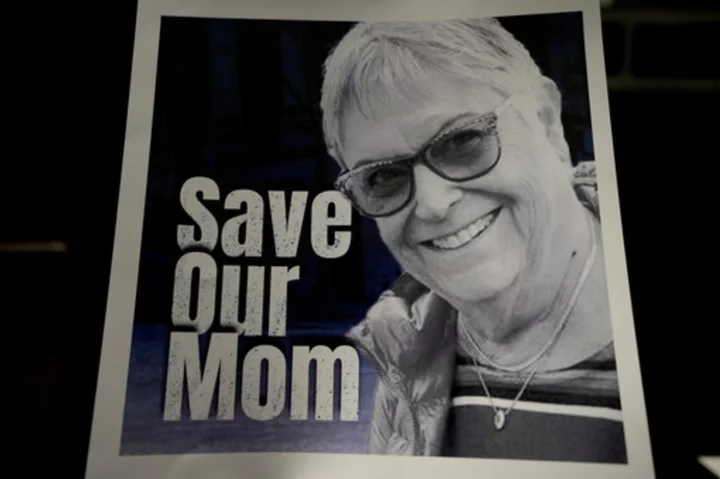
Ada Sagi was already dealing with the pain of loss. Then war came to her door
Ada Sagi was getting ready to travel to London to celebrate her 75th birthday with family when Hamas militants attacked her kibbutz and took her hostage
2023-10-14 22:54
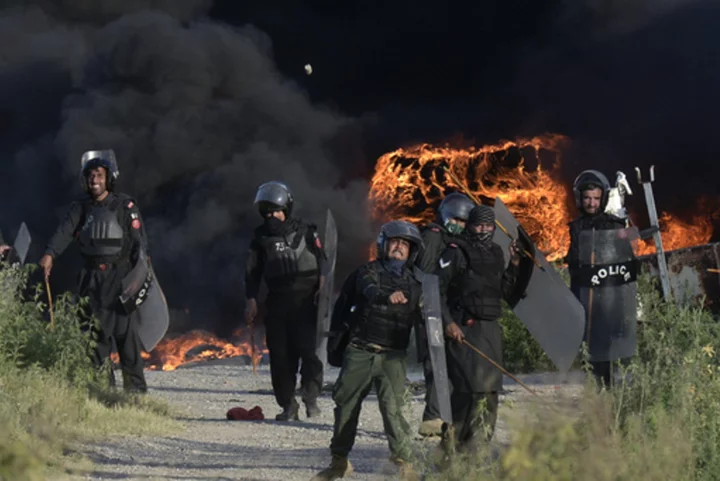
With ex-PM Imran Khan in custody, Pakistan cracks down on his supporters, arresting hundreds
Pakistani authorities are cracking down on supporters of former Prime Minister Imran Khan, detaining hundreds in overnight raids and sending troops across the country to rein in the wave of violence that followed his arrest earlier this week
2023-05-11 17:46
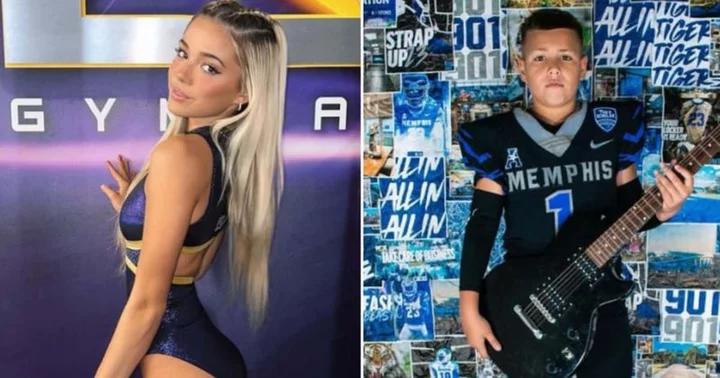
Who is Baby Gronk? Olivia Dunne's TikTok video with 10-year-old football sensation goes viral
Dunne gave 'Baby Gronk' a big hug, exclaiming that he was 'so cute!'
2023-06-08 18:59

Chip designer Arm targets $52 bn valuation in year's largest IPO
British chip designer Arm is targeting a valuation of more than $52 billion for its initial public offering (IPO) on the Nasdaq exchange on Thursday, according...
2023-09-14 09:15

German victims cycle to Rome to press pope on church abuse
By Alvise Armellini VATICAN CITY (Reuters) -A group of German victims of abuse on Wednesday called on Pope Francis to
2023-05-18 00:22
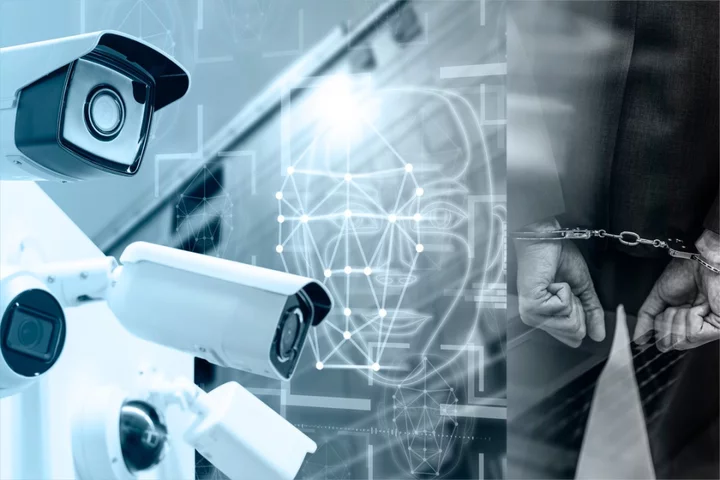
Wrongly arrested because of facial recognition: Why new police tech risks serious miscarriages of justice
On 16 February, Porcha Woodruff was helping her children get ready for school when six Detroit police officers arrived at her door. They told her she was under arrest for a January carjacking and robbery. She was so shocked she wondered for a moment if she was being pranked. She was eight months into a difficult pregnancy and partway through a nursing school programme. She did little else besides study and take care of her kids. She certainly wasn’t out stealing cars at gunpoint, she said. “I’m like, ‘What,?’ I opened my door so he could see my stomach. ‘I’m eight months pregnant. You can see two vehicles in the driveway. Why would I carjack?’” she told The Independent. “‘You’ve gotta be wrong. You can’t have the right person.’” Her children cried as she asked officers if the suspect was pregnant and insisted they had mistakenly arrested her. She was put in handcuffs and taken to jail, where she had panic attacks and early contractions. She later learned police identified her as a suspect after running security footage through the department’s facial recognition software, relying on a 2015 mugshot from a past traffic arrest into a photo lineup where the carjacking victim singled out Ms Woodruff as her assailant. The Detroit Police Department eventually dropped the case, but the arrest has deeply shaken Ms Woodruff. “What happened to the questioning? What happened to me speaking to someone?” she said. “What happened to any of the initial steps that I thought were available to a person who was accused of doing something?” The case underscores the growing risks of civil rights violations as police departments and law enforcement agencies across the country increasingly adopt facial-recognition and other mass surveillance technologies, often used as an unreliable shortcut around methodical human police work. Criminal justice advocates and the people targeted by this burgeoning police tech argue these programmes are riddled with the same biases and opaque or nonexistent oversight measures plaguing policing at large. The early results, at least, haven’t been encouraging. At least six people around the US have been falsely arrested using facial ID technology. All of them are Black. These misfires haven’t stopped the technology from proliferating across the country. At least half of federal law enforcement agencies with officers and a quarter of state and local agencies are using it. “We have no idea how often facial recognition is getting it wrong,” Albert Fox Cahn, executive director of the Surveillance Technology Oversight Project (STOP), told The Independent. “When you have facial recognition being used thousands of times, without any accountability for mistakes, it’s inviting injustice,” he added. Nowhere has that injustice been more pronounced than Detroit, a city where Black people have long experienced documented over-policing from law enforcement. Three of the six people mistakenly arrested by facial recognition technology have been in the Motor City, according to the ACLU. This status quo is why Ms Woodruff is suing DPD, claiming among other things that the agency has engaged in “a pattern of racial discrimination” against her and other Black residents “by using facial recognition technology practices proven to misidentify Black citizens at a higher rate than others in violation of the equal protection guaranteed by” the Michigan civil rights statutes. “I definitely believe that situation would’ve gone differently had it been another race, honestly, just my opinion. There was no remorse shown to me and I was pregnant. I pleaded,” she told The Independent. “Being mistaken for something as serious as that crime – carjacking and armed robbery – that could’ve put me in a whole different type of lifestyle,” she added. “I was in school for nursing. Felons cannot become nurses. I could’ve ended up in jail. That could have altered my life tremendously.” The Independent has requested comment from DPD. After Ms Woodruff filed her suit, Detroit police chief James White said in a press conference in August “poor investigative work” led to the false arrest, not facial recognition technology. He claimed that department software gave detectives numerous possible suspects and was only meant to be a “launch” point for further investigation. “What this is, is very, very poor investigative work that led to a number of inappropriate decisions being made along the lines of the investigation, and that’s something this team is committed to not only correcting, having accountability, having transparency with this community, and in building policy immediately to ensure regardless of the tool being used, this never happens,” Mr White said. He added that officers won’t be allowed to use images sourced by facial recognition in lineups, and warrants based on facial ID matches must be reviewed by two captains before being carried out. ‘The lead and the conclusion’ Some aren’t convinced these changes will prevent the excesses of what they see as a fundamentally flawed technology. “The technology is flawed. It’s inaccurate,” Philip Mayor, senior staff attorney at the ACLU of Michigan, told The Independent. “Police repeatedly assured us that it’s being used only as an investigative lead, but what we see here in Detroit time and time again is it is both being used as the lead and the conclusion.” Studies suggest that facial-recognition algorithms, which have been used to capture suspects in high-profile cases like those connected to January 6, also fail to accurately identify Black people and women, driving up inequalities in arrests, because image-training datasets often lack full diversity. However, according to Mr Mayor, police departments make things even worse by failing to do basic training and common-sense investigative work on top of facial recognition tools. He represents Robert Williams, a Detroit man who was mistakenly arrested for a 2020 theft from a high-end Detroit boutique. A security contractor employed by the store worked with the city and state police and flagged Mr Williams’ name using facial recognition tools. How police came to trust that Williams was the right man reveals the sloppiness of how facial ID tech is used in practice, according to the ACLU attorney. After the theft, police searched a database containing both past photos of Mr Williams and his present-day driver’s license. ‘It picks out 486 people who are the most likely perpetrators; not a single one of them is his current driver’s license, even though his current driver’s license is in the database that was searched,’’ Mr Mayor said. “That seems like an obvious exculpatory fact, the kind of thing that would lead you to say if you were actually thinking, this isn’t the right guy.” When these dubious matches are then used to build a line-up, questionable police work attains the gloss of near-fact, and witnesses choose from a group of people who may have no credible tie to a crime that took place but still look something like the person who did. “This is not me,” Mr Williams told police during his investigation, according to The New York Times. “You think all Black men look alike?” The father of two, after asking a local police voluntarily stop using facial recognition technology, sued the DPD in 2021. “This technology is dangerous when it doesn’t work, which is what the cases in Detroit are about. It’s even more dangerous when it does work. It can be used to systematically surveillance when we come and go from every one of the places that are important in our private lives,” the ACLU attorney said. “I don’t think there’s any reason to believe that departments elsewhere right now are not making the same mistakes.” ‘A force multiplier for police racism’ Detroit isn’t the only place grappling with the impacts – and errors – of this technology. In Louisiana, the use of facial recognition technology led to a wrongful arrest of a Georgia man for a string of purse thefts. A man in Baltimore spent nine days in jail after police incorrectly identified him as a match to a suspect who assaulted a bus driver. The Baltimore Police Department ran nearly 800 facial recognition searches last year. Those cases and others have added to a growing list of misidentified suspects in a new era of racial profiling dragnets fuelled by tech that is rapidly outpacing police and lawmakers’ ability to fix it. Facial recognition software often is “a force multiplier for police racism,” worsening racial disparities and amplifying existing biases, according to Mr Cahn. It can spur a vicious cycle. Black and brown people are already arrested at disproportionate rates. These arrests mean they are more likely to enter a database of faces being analyzed and used for police investigations. Then, error-prone facial recognition technology is used to comb these databases, often failing to identify or distinguish between Black and brown people, particularly Black women. “So the algorithms are biased, but that’s just the start, not the end of the injustice,” Mr Cahn says. Such technologies, advocates warn, are embedded in wider mass surveillance programmes that often lack robust public oversight. In New York City, law enforcement agencies relied on facial recognition technology in at least 22,000 cases between 2016 and 2019, according to Amnesty International. New York City’s Police Department spent nearly $3bn growing its surveillance operations and adding new technology between 2007 and 2019, including roughly $400m for the Domain Awareness System, built in partnership with Microsoft to collect footage from tens of thousands of cameras throughout the city, according to an analysis from STOP and the Legal Aid Society. The NYPD has failed to comply with public disclosure requirements about what those contracts – from facial recognition software to drones and license plate readers – actually include, according to the report. Until 2020, that money was listed under “special expenses” in the police budget until passage of the Public Oversight of Surveillance Technology Act. The following year, more than $277m in budget items were listed under that special expenses programme, the report found. “We’ve seen just concerted pushback from police departments against the sort of oversight that every other type of government agency has because they don’t want to be held accountable,” according to Mr Cahn. “If we treated surveillance technology vendors the way we treated other technology vendors, it would be like Theranos – police would be arresting some of these vendors for fraud rather than giving them government contracts,” he added. “But there is no accountability.” On 7 August, 2020, New York City Police Department officers in riot gear launched a six-hour siege outside Derrick Ingram’s Hell’s Kitchen apartment. Mr Ingram – a racial justice organiser who is embroiled in a federal lawsuit against the NYPD – was surrounded by more than 50 officers after he allegedly shouted into an officer’s ear at a protest earlier that summer. Police insisted they had a warrant on assault charges, but couldn’t produce one when Mr Ingram asked them to, according to his suit. The whole encounter, in which the NYPD deployed snipers, drones, helicopters, and police dogs, began with facial recognition technology. “To say that I was terrified is an understatement – I was traumatized, I still am,” Mr Ingram later testified. “I fear deep down in my core that if I opened my door to those officers, my life would be swiftly taken.” To identify Mr Ingram as a potential suspect, NYPD relied on facial recognition software “as a limited investigative tool, comparing a still image from a surveillance video to a pool of lawfully possessed arrest photos,” according to a police statement, adding that “no one has ever been arrested solely on the basis of a computer match.” The software pulls from a massive internal database of mugshots to generate possible matches, according to the department. Civil rights groups and lawmakers criticized the department’s use of facial recognition – initially hailed as a tool to crack down on violence offenders – for being deployed to suppress dissent, and triggering a potentially lethal police encounter at Mr Ingram’s home. As for Ms Woodruff in Detroit, she hopes her experience can show the dangers of relying too heavily on facial recognition technology. “It may be a good tool to use, but you have to do the investigative part of using that, too,” she said. “It’s just like everything else. You have your pieces that you put together to complete a puzzle.” Her life would’ve been a whole lot different, she said, if “someone would’ve just taken the time to say, ‘OK, stop, we’re going to check this out, let me make a phone call.’” Read More Detroit police changing facial-recognition policy after pregnant woman says she was wrongly charged White House science adviser calls for more safeguards against artificial intelligence risks How a Drake concert put NYPD’s ‘arsenal’ of surveillance technologies under the spotlight
2023-09-17 22:18

The pro-Ukraine internet 'fellas' using Shiba Inu memes to fight Russian propaganda
It looked like a normal tweet by Estonian Prime Minister Kaja Kallas, posted days before NATO's summit in Vilnius, Lithuania. But instead of referring to the military alliance's acronym, she congratulated the "fellas" on their "first-ever NAFO summit."
2023-07-11 12:19

Soldier recounts terrifying details of shark attack where he lost an arm
A former soldier has recounted the terrifying shark attack he suffered during a military exercise which caused him to lose an arm and a leg. Paul de Gelder was a paratrooper who feared for his life during the ordeal, which saw him attacked by a 50-tonne bull shark. The animal tore off two of his limbs during the attack in 2009, and de Gelder spoke about his ordeal during an interview with CBS. The 46-year-old from Melbourne, Australia was taking part in a naval exercise in the Sydney Harbour when it took place. Sign up to our free Indy100 weekly newsletter “I was swimming from point A to point B on the surface on my back and a 10-foot bull shark came up from underneath me,” he said. "It grabbed me by the back of my right leg and my right hand, which was by my side, all in one bite." Describing how he tried to fight back by hitting the shark, de Gelder said: "That's when it started to shake me like a rag doll. As its teeth worked through my flesh and bone like saws, I was overcome by the most intense pain imaginable." He then recalled how he managed to escape the shark’s clutches before having to swim back to his boat surrounded by a pool of blood. "It took me under. The pain and the terror. I thought I was going to die. It removed my hamstring and my hand,” de Gelder added. "I had to swim back to my safety boat with one hand and leg through a pool of my own blood. I didn't think I was going to make it. “I'm very, very lucky and blessed to still be here and breathing today." He returned to work with the armed forces and also became a motivational speaker. However, despite his injuries, he believes that sharks should not be demonised. "I see my role as speaking up for an animal that doesn't have a voice,” he said. "I figure if someone like me who has almost lost their life and two limbs to a shark can understand why they are so important and why they need to be saved, then maybe everyone else should be able to as well." Have your say in our news democracy. Click the upvote icon at the top of the page to help raise this article through the indy100 rankings.
2023-07-25 20:47
You Might Like...
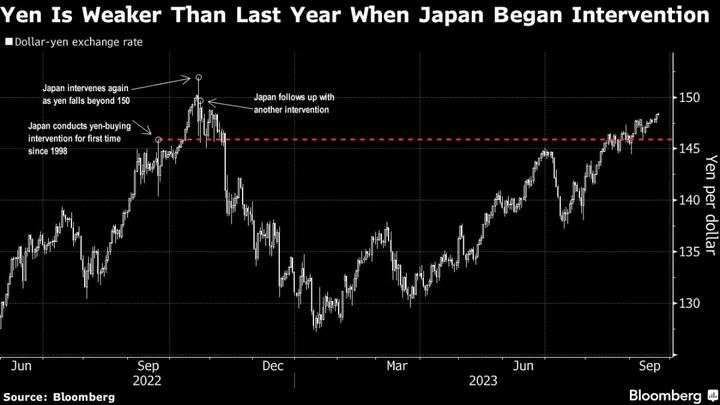
Traders on Intervention Watch as Yen Hovers Near 150 to Dollar
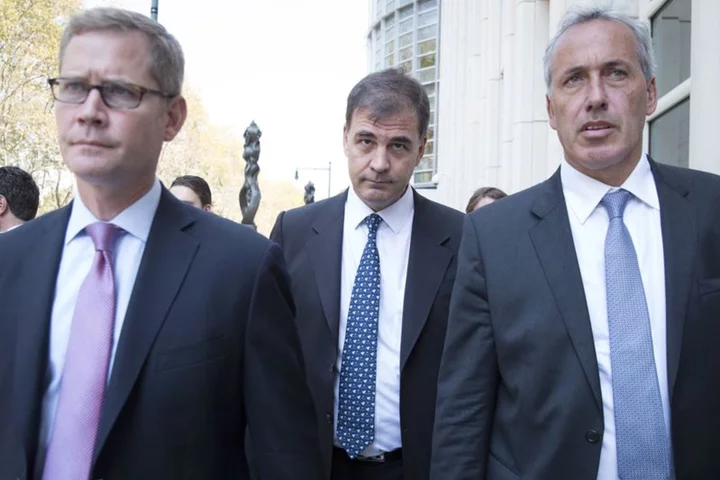
Soccer-Key witness in FIFA corruption probe to be sentenced in U.S
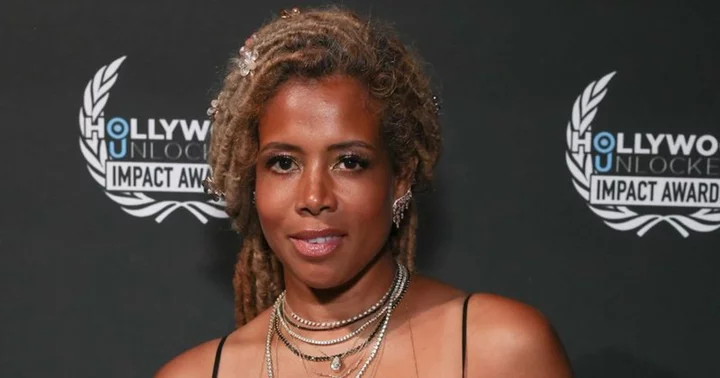
Did Kelis anticipate 'Milkshake' will be a huge success? Singer reveals her hit song had 'no takers' initially
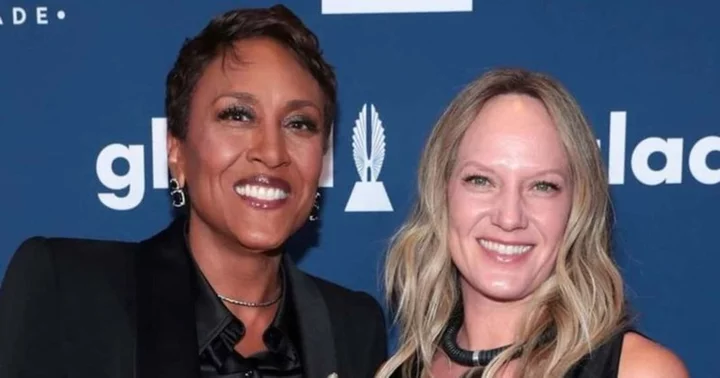
GMA’s Robin Roberts celebrates one month of 'marital bliss' with Amber Laign with serene photo featuring her dog

When wealthy adventurers take huge risks, who should foot the bill for rescue attempts?
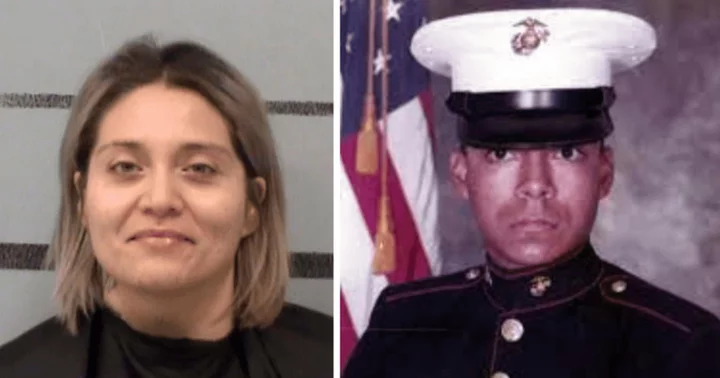
Who is Kassandra Aguayo? Texas woman gets indicted for allegedly murdering her former live-in-partner
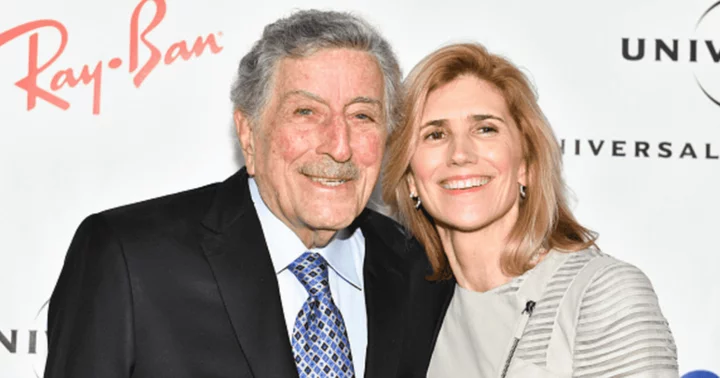
What did Tony Bennett's wife say about his death? Susan Benedetto pays tribute to her husband who died at 96

Klaviyo, Arm, Instacart wobble, raising doubts over IPO revival