
J3N Provides the Latest and Most Up-to-Date News, You Can Stay Informed and Connected to the World.
⎯ 《 Just 3 N : New News Now 》
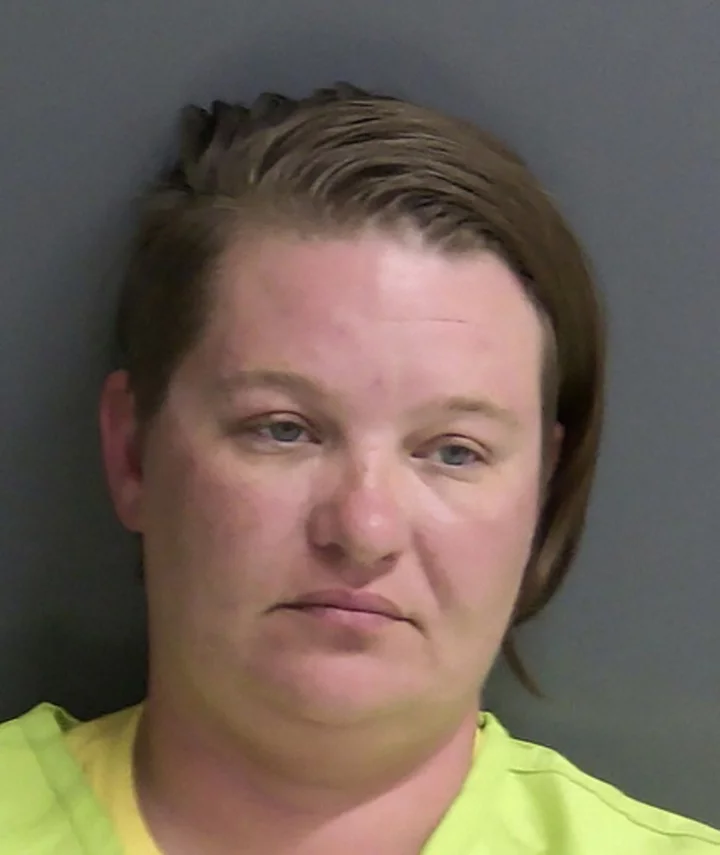
Mother of 6-year-old who shot first-grade teacher pleads guilty to state charge of felony child neglect
Deja Taylor, the mother of the 6-year-old who shot his first-grade teacher in January, pleaded guilty to a charge of felony child neglect Tuesday.
2023-08-15 23:29
Spain’s Sanchez Wins New Term Thanks to Catalan Amnesty Deal
Pedro Sanchez won reelection as Spain’s prime minister in a confidence vote in parliament on Thursday with the
2023-11-16 22:29
‘My body was burning’: Russian journalist’s horror journey in grips of suspected poisoning
“If you’re a journalist and the government wants to kill you – you’re doing it right”. Those are the chilling words of broadcaster Irina Babloyan, who until Vladimir Putin’s invasion of Ukraine hosted Russia’s most popular morning radio show. But stalked by the FSB and taken off the air within days of the war starting, the journalist felt compelled to leave Moscow for her own safety. Little did she realise, like so many of Putin’s critics, she would also suffer symptoms of suspected poisoning that left her skin “burning all the time”. Established prior to the collapse of the Soviet Union, Russia’s sole major independent radio station Echo of Moscow was taken off air in March 2022, during the Kremlin’s clampdown on information, and then shut down completely. Events soon took an even darker turn. Late one evening, near her home, Ms Babloyan was out walking with her close friend, opposition politician Ilya Yashin, when he was arrested. He was later sentenced to eight and a half years in prison, over a YouTube livestream about Russian atrocities in Bucha. From that moment, she says Russian police and FSB agents followed her everywhere – even some 350 miles south to Belgorod – and openly sat outside her home, threatening her that “it’s probably better for you to leave”. It was as she began to investigate early reports of Ukrainian children being forcibly taken to Russia that the personal danger to Ms Babloyan intensified. She approached Russian government officials, who told her they were aware of the situation and that the children would remain in the country until the war was over. While she was initially aware of just one “school” housing Ukrainian children in Russia, the findings soon snowballed until she learned from a fellow journalist of dozens more facilities, holding thousands more. Ukraine’s current figures suggest at least 19,000 children have been taken. “I was really shocked and I understood: okay, probably it’s time for me to leave,” Ms Babloyan said, adding: “I was so tired and felt I couldn’t change the situation.” She returned to her home country of Georgia in October, amid another Russian exodus sparked by Putin’s mobilisation order. With Echo of Moscow set to resume programming via its app from Berlin, the journalist planned to move to there – in a journey requiring her to drive to Armenia, before flying from Yerevan to Moldova, and then on to the German capital. On the eve of the long trip, she suddenly “felt something strange going on”. “In a second”, she began to feel nauseous and tired. “I had dinner with friends – I didn’t want to eat, I didn’t want to drink, I ordered salad and wine, and didn’t [touch] it at all. I decided to go to bed, went to my hotel and fell asleep.” It was the last time she would sleep for three days. She awoke feeling “much worse”, recalling: “I couldn’t move normally – every single movement was very hard.” She felt a metallic taste in her mouth, with “crazy” pain in her head and “in a strange place” in her stomach, while her hands and feet had turned “wine red”. “I couldn’t move my fingers normally, and I felt like [I was] touching fire in [my] hands and feet,” Ms Boloyan said. Blaming hitherto dormant allergies, she bought some antihistamines, packed a bag and embarked on a four-hour taxi journey to Yerevan. Save for the border crossing, she lay on the back seat for the entire journey, unable to move. “Every single piece of my body was burning. I couldn’t think normally, couldn’t concentrate on anything.” At the airport after a sleepless night in a hotel, filled with anxiety, she arranged a phone appointment with a Russian doctor, who told her the symptoms were probably caused by stress. “I was sitting waiting my flight crying all the time I was talking because they didn’t understand what was going on,” she said. Ms Babloyan spent another sleepless night in Chisinau, the Moldovan capital, before flying to Germany, where finally on the third day, she found she could walk, talk and eat again. “It was not all gone, but it was much better,” she said. Without health insurance, it was December by the time she saw a doctor, who prescribed her antidepressants and told her allergy tests would cost €6,000. Soon after, Ms Babloyan was forced to stop doing her radio show, as “something strange started happening with my skin”, which broke out in hive-like red spots, “burning all the time”. She took the tests for all known allergens, which came back negative. At this point, a Russian friend recommended another doctor, who upon seeing her skin immediately told her she needed toxicology tests for heavy metals – and said she knew of two other Russians, a journalist and activist, who had recently fallen ill in Europe with similar symptoms. The two other cases – Novaya Gazeta journalist Elena Kostyuchenko, in Berlin, and US-based Free Russia Foundation president Natalia Arno, in Prague – were being looked into by Riga-based investigative outlet The Insider. Doctors and poison specialists have since told the outlet that poisoning is the only explanation for Ms Kostyuchenko’s symptoms, and is the most likely reason for Babloyan and Arno’s symptoms. She was tested at the Charité Hospital, where the now-jailed Russian opposition leader Alexei Navalny was diagnosed in 2020. But she was later told that her toxicology tests had been “lost”, and although doctors also took a sample of her hair, she has still not been told the results. Ms Kostyuchenko is also still in the dark, despite claims by a source to The Insider that law enforcement carried out their own secret analysis of her blood. Having announced an investigation last month into Ms Kostyuchenko’s case, German prosecutors are now treating it as attempted murder. However, Georgia is yet to announce its own probe into Ms Babloyan’s case, and she is currently unable to return to Tblisi and formally trigger an investigation herself. For Ms Babloyan, it was while interviewing Ms Kosyuchenko on her radio show in mid-August that the stark reality truly began to set in. “When you are looking into the face and eyes of a person who felt the same [symptoms] and you understand it was real, it feels scary – very,” she said, adding that she is still “just trying to understand how to live when you know that someone wanted to kill you, and probably will do it again.” The journalist – who still has problems with her skin, and suffers pain in her fingers after opening a bottle or even a door – remains even more determined to offer an objective narrative on Russia’s affairs. “Work is like therapy for me,” she said. “I can’t stop working”, and noted that, as a journalist, if the government “wants to kill you, it means that, what you’re doing – you’re doing it right”. Asked whether she believed she had been targeted for her enquries into potential Russian war crimes, Ms Babloyan replied: “I just think that all Russian journalists and activists are a target for the Russian government. “But it’s hard to understand who’s going to be next because if you are trying to find logic, you can’t find it, and everyone can be a target.” Read More Ukraine’s First Lady Olena Zelenska’s interview with Bel Trew | An Independent TV Original Dodging a constant assault of Russian missiles – the war-weary keep fighting in Ukraine’s blood-soaked east Putin’s hit list: from poisoned tea to mysterious falls, the grisly fate of the Kremlin’s enemies Russia shuts down human rights group that preserved the legacy of Nobel laureate Andrei Sakharov
2023-09-10 16:45
Canada's Saskatchewan passes school gender identity bill
The Parents’ Bill of Rights includes a provision requiring young students get consent to change pronouns.
2023-10-21 07:52
Rina Sawayama takes major jab at Matty Healy as she dedicates ‘STFU!’ to him during Glastonbury festival
Rina Sawayama called Matty Healy out for his recent controversies and racist remarks
2023-06-25 15:21
U.N. agency says humanitarian access needed to get food to Gaza
ROME The United Nations World Food Programme (WFP) called on Sunday for the creation of humanitarian corridors to
2023-10-09 00:45
Tennis world nervously awaits Nadal's French Open decision
The tennis world nervously awaits Rafael Nadal's decision on Thursday on whether to defend his French Open title, as fears mount that the end is drawing...
2023-05-18 08:58
China sends top envoy Wang Yi to Russia for security talks
Moscow is seeking continued support on the Ukraine war, including a suspected North Korea arms deal.
2023-09-18 15:26
Unprecedented Israeli bombardment lays waste to upscale Rimal, the beating heart of Gaza City
Following a night of intense bombardment, residents were struggling Tuesday to grasp the sheer scale of damage inflicted on the upscale Rimal neighborhood in central Gaza City
2023-10-11 01:21
9 arthritis myths we all need to stop believing
Many people assume arthritis is just an ‘old person’s’ disease, and an inevitable part of getting older. Try telling that to the parents of toddlers impacted by the condition, or the 20-somethings living with it. The suggestion that it only troubles the elderly is one of many myths associated with arthritis, which affects around 10 million people in the UK. “One in six people live with the pain, fatigue, and disability arthritis can cause. The impact can be huge, affecting the ability to work, care for family, move free from pain and live independently,” says Deborah Alsina, chief executive at the arthritis support charity Versus Arthritis, speaking to mark Rheumatoid Arthritis Awareness Week (September 11–17). “There are many misconceptions when it comes to understanding arthritis, but by shining a light on the reality of living with arthritis day in, day out, we can help grow understanding and inspire people to take action.” Dr Amara Ezeonyeji, consultant rheumatologist from The Lister Hospital in London (part of HCA Healthcare UK), adds: “Arthritis is a general term that refers to a group of over 100 different types of inflammatory joint diseases that affect the musculoskeletal system. The most common symptom of arthritis is joint pain, but it can also cause stiffness, swelling, and decreased joint mobility.” She says the most common form of arthritis is osteoarthritis (OA), often associated with wear and tear of the joints. Other common types are rheumatoid arthritis (RA), an autoimmune disease that primarily affects the joints; psoriatic arthritis, a type of arthritis associated with the skin condition psoriasis; ankylosing spondylitis which primarily affects the spine and can lead to fusion of the vertebrae; and gout, which is caused by the accumulation of uric acid crystals in the joints and often affects the big toe. “There are several myths about arthritis that are often repeated. It’s important to dispel these to promote an accurate understanding of arthritis, and to encourage those affected to seek appropriate medical care and support from a rheumatologist,” Ezeonyeji adds. Here, Alsina and Ezeonyeji debunk nine common arthritis myths… Myth 1: Arthritis only affects the elderly While it is more common in older adults, arthritis can affect people of all ages, including children and young adults. Myth 2: Cracking your knuckles causes arthritisPeople who crack their knuckles will sometimes be wrongly warned that it’ll bring on arthritis, but Ezeonyeji explains: “There’s no scientific evidence linking knuckle cracking to the development of arthritis. When people crack their knuckles, they experience a release of pressure in the joints and relaxation in the surrounding muscles. It can make the joint feel more mobile and is unlikely to cause arthritis or other problems.” Myth 3: It’s just wear and tearAlsina says one of the most damaging myths is that any form of arthritis is just ‘wear and tear’. “Osteoarthritis is the most common type of arthritis and will affect half of us by age 70. But it isn’t an inevitable part of ageing – your joints are not like car tyres destined to wear down and be replaced. They are made of complex living tissue that our bodies constantly repair and maintain, and osteoarthritis occurs when our bodies can no longer do this effectively,” she says. “Our joints get stronger the more we use them, so keeping physically active and maintaining a healthy weight can help keep osteoarthritis under control.” Myth 4: Cold damp weather causes arthritisAlthough cold and damp weather can sometimes make arthritic joints feel worse, it’s definitely not why arthritis starts. Ezeonyeji explains: “Weather can influence joint discomfort, but it doesn’t cause arthritis. Arthritis is primarily a result of genetic and environmental factors.” Myth 5: Exercise makes arthritis worse People with arthritis can often find it hard to maintain regular physical activity, but a lack of movement can actually increase symptoms such as stiffness and pain, warns Alsina. “Building activity into your daily routine can help improve this, because using your joints builds muscle strength and improves the blood supply, all of which can ease symptoms and keep joints in better shape for longer.” She says different activities will suit different people, but adds: “Swimming and cycling are great exercises to try, as they get the body moving without putting pressure on painful joints.” It’s always a good idea to seek advice from a healthcare specialist if you are unsure what types of exercise will be suitable for you. Myth 6: Arthritis is just joint pain – it’s not serious Ezeonyeji says that while arthritis can be debilitating and lead to a reduced quality of life, it can get even more serious than that for some people. “Rheumatoid arthritis, for instance, is an autoimmune disease that can affect various organs and tissues in addition to joints,” she points out. Myth 7: There’s no treatment for arthritis While there’s no cure for arthritis, Ezeonyeji says there are many effective treatments for managing the disease, including pain relief medication, physiotherapy, disease modifying agents and biological drugs for inflammatory arthritis, plus joint surgery in some cases. “It’s also recommended that people with arthritis modify their lifestyle and try to lose weight [if they need to], follow a healthy balanced diet, exercise regularly and stop smoking,” she adds. Myth 8: Miracle cures can make arthritis disappear Although some people with arthritis believe copper or magnetic bracelets ease symptoms, Alsina says studies show no evidence to support this. “It’s the same with lots of supplements, and some of these are really pricey,” she observes. “Interestingly though, placebos can be very effective and continue to work even if you know it’s a placebo, so if you find these helpful there’s no reason to stop.” Myth 9: Certain foods definitely help/hinder arthritisThere are claims that foods like tomatoes can cause arthritis flares, and other foodstuff like cider vinegar may help it. Alsina says: “Sadly there’s no good evidence that there are specific foods you should avoid or have more of. But if you do find things that are helpful or make your symptoms worse, then listen to your body.” Read More Charity boss speaks out over ‘traumatic’ encounter with royal aide Ukraine war’s heaviest fight rages in east - follow live Prince Harry spotted at Windsor Castle on anniversary of Queen’s death How the weather can change the way you dream All the times Kate has channelled the late Queen’s style since her death
2023-09-11 15:22
Who is Eric Pratt? Moab officers hire lawyer to deal with $50M wrongful death suit filed by Gabby Petito's family
The lawsuit by Gabby Petito's family alleges that several officers, including Pratt, failed to protect Gabby, ultimately leading to her death
2023-08-15 19:46
Joe Biden and Narendra Modi hail 'defining' US-India partnership
Narendra Modi addresses the US congress, attends a state dinner and receives a 21-gun salute.
2023-06-23 11:25