J3N Provides the Latest and Most Up-to-Date News, You Can Stay Informed and Connected to the World.
⎯ 《 Just 3 N : New News Now 》
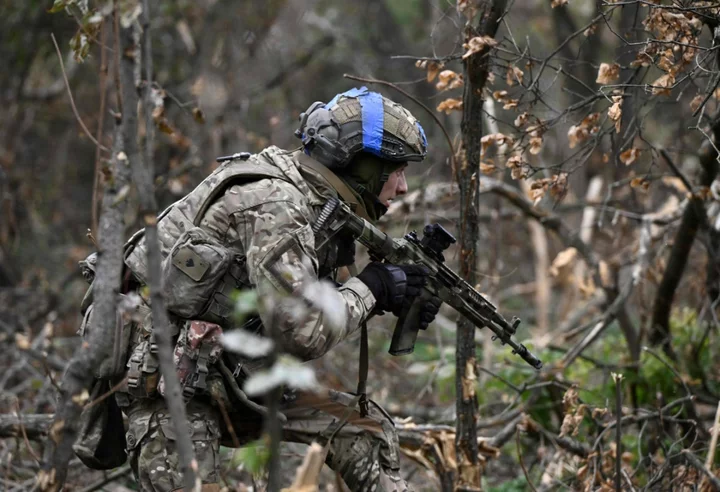
Ukrainian sniper ‘breaks world record after killing Russian soldier nearly 2.5 miles away’
A Ukrainian sniper claims to have broken the world record by killing a Russian soldier almost 2.5 miles away, with a custom rifle called ‘Lord of the Horizon’. The previous record was held by a Canadian special operations sniper at a distance of 2.2 miles in Iraq in 2017. In a press statement, the Security Service of Ukraine (SBU) said: “The SBU sniper set a world record for a successful shot. “He hit a Russian soldier from an incredible distance. “SBU snipers are changing the rules of world sniping, demonstrating the ability to work effectively at fantastic distances.” Video footage apparently capturing the shot was shared on various Ukrainian media outlets, which appears to show the target falling several seconds after the sniper fires his weapon. The weapon used was developed and made by MAYAK and is said to fire bullets that travel faster than the speed of sound for nearly 10,000ft if used with the correct ammunition. The world record was once held by British sniper Craig Harrison, after he killed Taliban fighter in Afghanistan in 2009 from a distance of 1.54 miles. A separate record is held by another British sniper who killed six Taliban fighters with one shot after it triggered the suicide vest one of them was wearing. The world-record comes just a year after Ukraine almost broke the record when one of its snipers shot a Russian soldier from 1.7miles away, thought the be the world’s second-longest combat kill. Over the weekend, Ukrainian soldiers have been using high-speed jet skis to conduct attacks, with the country saying they will continue to use them as weapons to combat Putin’s troops in occupied Crimea. Read More Iceland volcano eruption update: Magma ‘very close’ to surface Russia-Ukraine war live: Putin to give shock G20 speech as troops desert Donetsk Cyprus' president says his country is ready to ship aid to Gaza once a go-ahead is given
2023-11-21 11:47
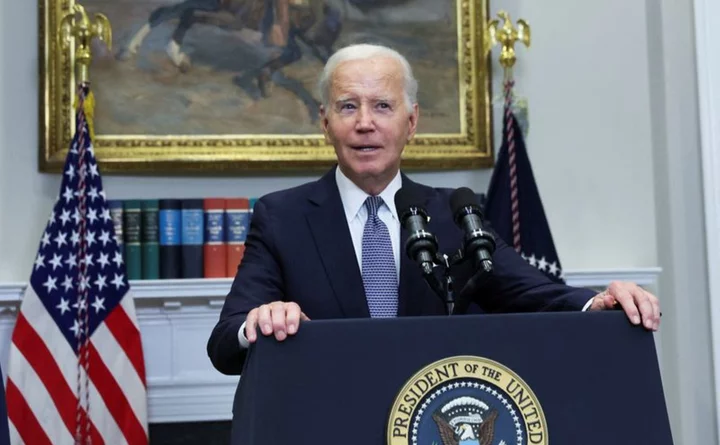
Biden condemns Supreme Court striking down affirmative action: ‘This is not a normal court’
President Joe Biden said he “strongly, strongly disagreed” with a Supreme Court decision to strike down the decades-long use of affirmative action in college admissions. The court’s conservative majority overturned admissions plans at Harvard and the University of North Carolina, saying race can no longer be considered as a factor in universaity admissions. The landmark ruling overturns generations of affirmative action, which began in the 1960s as a way to increase diversity after the hard-won success of the civil rights movement. Chief Justice John Roberts said that, for too long universities have “concluded, wrongly, that the touchstone of an individual’s identity is not challenges bested, skills built, or lessons learned but the color of their skin. Our constitutional history does not tolerate that choice.”Justice Clarence Thomas — the nation’s second Black justice, who had long called for an end to affirmative action — wrote that the decision “sees the universities’ admissions policies for what they are: rudderless, race-based preferences designed to ensure a particular racial mix in their entering classes.” However, Justice Sonia Sotomayor wrote in dissent that the decision “rolls back decades of precedent and momentous progress.” President Biden urged colleges not to let the ruling “be the last word” as he praised Justice Sotomayor and the other dissenting judges, Elena Kagan and Ketanji Brown Jackson. “Discrimination still exists in America. Today’s decision does not change that,” Mr Biden said. “I believe our colleges are stronger when they’re racially diverse. Our nation is stronger because we are tapping into the full range of talent in this nation. We cannot let this decision be the last word.” The rulings come from two consolidated cases, Students for Fair Admissions v University of North Carolina and Students for Fair Admissions v Harvard College. Both were brought by anti-affirmative action organisation, Students for Fair Admissions, headed by conservative legal strategist Edward Blum. While the court upheld such programmes in a decision nearly two decades ago, the newly-emboldened conservative majority swept away any legal justification for them in Thursday’s opinions. In a 6-3 and 6-2 decision, it claimed the use of race-conscious admissions was a violation of the Equal Protection Clause of the 14th Amendment. Now, higher education institutions will no longer be allowed to consider race as a factor in admissions. Instead, students who wish to have their race or culture considered in their application will have to volunteer the information in their personal essay. Asked about the court’s decision to strike down a long-standing precedent, Mr Biden remarked: “This is not a normal court.” Leaders from Harvard said in a letter that they would “comply” with the court’s decision but emphasised that “deep and transformative teaching, learning, and research depend upon a community comprising people of many backgrounds, perspectives, and lived experiences”. Mr Biden said he will direct the Department of Education to find ways to improve diversity without using race as a conscious factor in admissions and recruiting. The Harvard Black Students Association called the court’s decision “detrimental”, adding that it “poses a significant threat to the future of the Black community on and beyond our campus”. “It is evident that the college application system cannot maintain holistic evaluation without taking into consideration how race profoundly influences our experiences, perspectives, and identities in multifaceted ways,” it wrote. Derrick Johnson, president and chief executive of the NAACP, said in a statement: “In a society still scarred by the wounds of racial disparities, the Supreme Court has displayed a wilful ignorance of our reality.” Discussions around affirmative action have generated debate among Republicans and Democrats for years. Those in support of it believe it is necessary to create fair and equal opportunity for students of color because higher education institutions have failed at creating diverse student bodies. Those against affirmative action believe it puts other students, such as white or Asian American students, at a disadvantage. Donald Trump celebrated the ruling, saying it was the result “everyone was waiting for” in a post on Truth Social. “We’re going back to all merit-based – and that’s the way it should be!” the former president wrote. Mr Trump appointed three of the six conservative justices on the Court while president: Neil Gorsuch, Brett Kavanaugh and Amy Coney Barrett. His former vice president, Mike Pence, also expressed support for the court’s decision, tweeting: “I am honored to have played a role in appointing three of the Justices that ensured today’s welcomed decision.” He added: “There is no place for discrimination based on race in the United States, and I am pleased that the Supreme Court has put an end to this egregious violation of civil and constitutional rights in admissions processes, which only served to perpetuate racism.” The ruling could have repercussions beyond higher education institutions, extending to elementary, middle and high schools as well as workplaces and more as it opens a door for challenges to racial diversity programs. Read More US judge temporarily blocks Mississippi law on state police permits for some protests In the Supreme Court chamber, the subject was race, the mood was somber, the criticism harsh Affirmative action is out in higher education. What comes next for college admissions? Justice Ketanji Brown Jackson delivers searing civil rights lesson in dissent to affirmative action ruling How the government that promised to ‘stop the boats’ has lost control of its immigration policy Clarence Thomas says he doesn’t have a ‘clue’ what diversity means as Supreme Court takes aim at affirmative action One year after the anti-abortion ruling, the White House keeps a spotlight on the issue
2023-06-30 07:53
Russia claims `neo-Nazis' were at wake for Ukrainian soldier in village struck by missile killing 52
Russia’s U.N. ambassador claims that alleged “neo-Nazis” and men of military age were at the wake for a Ukrainian soldier in a village café that was hit by a missile strike last week, killing 52 people
2023-10-10 08:49
El Salvador cuts short football championship after deadly stampede
El Salvador football authorities have canceled the remainder of the national championship because of safety concerns, after a stampede at...
2023-05-25 17:51
Internet showers Netflix show 'Fauda' stars with praise as they join frontline duty to defend Israel against Hamas
'Our hearts are with you! God bless you and Israel,' tweeted a fan
2023-10-14 22:45
US President Biden's son Hunter sues Giuliani, lawyer over alleged data breach
WASHINGTON U.S. President Joe Biden's son, Hunter Biden, sued Rudy Giuliani and Giuliani's former lawyer Robert Costello, accusing
2023-09-26 22:15
Thousands rally, Israeli reservists step up protest against judicial change
By Dan Williams TEL AVIV Protests against Prime Minister Benjamin Netanyahu's judicial overhaul intensified on Tuesday with demonstrations
2023-07-19 04:29
Algeria country profile
Provides an overview of Algeria, including key dates and facts about this north African country.
2023-07-03 19:16
Boston councilmember wants hearing to consider renaming Faneuil Hall due to slavery ties
Boston’s City Council is expected to debate whether to hold a hearing on renaming Faneuil Hall, a popular tourist site that is named after a wealthy merchant who owned and traded slaves
2023-10-25 12:24
Lead poisoning causes far more death, IQ loss than thought: study
Lead poisoning has a far greater impact on global health than previously thought, potentially contributing to over five million deaths a year and posing a similar threat to...
2023-09-12 13:49
As modern Turkey turns 100, what’s next for Kemal Ataturk’s republic
The Turkish Republic, founded from the ruins of the Ottoman Empire by the national independence hero Mustafa Kemal Ataturk, turns 100 on Sunday, October 29. Ataturk established a Western-facing secular republic modeled on the great powers of the time, ushering in radical reforms that abolished the caliphate, replaced the Arabic script with the Roman alphabet, gave women the vote and adopted European laws and codes. Turkey has, however, taken on a more conservative character under the two-decade-old rule of President Recep Tayyip Erdogan, whose party has roots in the country's Islamic movement and who has become Turkey's most influential leader since Ataturk. The centennial offers Erdogan, re-elected for a third term in May, a chance to redefine the country and propel it into a new era he has dubbed “Turkey’s Century.” Here is a look at some of the republic’s greatest accomplishments, and controversial realignments as it embarks on its second century. Religious identity The secular vs. conservative debate remains one of the most contentious cultural divides in Turkey. Ataturk, the nation’s founding father, envisioned a secular country as a prerequisite to modernity. Over the decades, the separation of religion and state became a deeply ingrained ideology. The country went on to impose bans on headscarves in schools and public institutions, brought restrictions on religious education, adopted liberal policies on alcohol, and even converted the main Ottoman imperial mosque, the Hagia Sofia, into a museum. All these policies have been reversed under Erdogan, who has shifted the country toward conservatism. Now official functions open with prayers, the Directorate of Religious Affairs has been given a budget which dwarfs most ministries, the number of religious schools have increased and even Erdogan’s unorthodox economic policy of reducing interest rates - abandoned recently - was justified on religious grounds. “Ataturk was a ... top-down politician who believed in social engineering and he wanted to refashion Turkey as a secular, West-facing, European society," said Soner Cagaptay, an expert on Turkey at the Washington Institute and author of several books on Erdogan. "Erdogan, too, believes in top-down social engineering. While his method is similar to that of Ataturk, his values are almost the exact opposite.” Diplomacy The Western-oriented country joined NATO in 1952 and is officially a candidate to join the European Union - although the membership negotiations have now come to a standstill. Turkey’s interests generally aligned with those of Western countries for much of the 20th century. In recent years, however, Turkey has adopted a much more assertive foreign policy which aims to extend Ankara’s reach both regionally and worldwide. This new independent diplomacy is just as likely to pit Turkey against Western interests as it is to align with them. One recent point of tension between Turkey and the West has been in Syria, with Turkey frequently launching attacks against local Kurdish forces which Europe and the United States consider allies and Turkey considers as off-shoots of the outlawed Kurdistan Workers’ Party, or PKK. Turkey now controls large swaths of territory in Syria and speaks of creating a buffer zone along its borders with Syria and Iraq against Kurdish fighters. Following Russia’s invasion of the Ukraine, both Sweden and Finland decided to abandon their long-standing neutrality and join NATO. Yet Turkey became the main holdout against Swedish membership, accusing Sweden of being too soft toward the PKK and other groups outlawed by Turkey. Turkey’s new, pragmatic foreign policy also extends to its relations with Russia, a major trading partner. While most NATO countries took a strong stance against Moscow over its invasion of Ukraine, Ankara has maintained close ties even as it opposes the war. While impeding NATO’s cohesion, Turkey’s non-alignment does put it in a unique position where it can act as mediator in global conflicts, including the war in Ukraine. Cagaptay sees similarities in Ataturk's and Erdogan's goals of wanting to turn Turkey into a great power. But whereas Ataturk decided to embrace and copy policies of European powers of the time, Erdogan “has no interest in folding Turkey under Europe and believes he can achieve this on his own,” Cagaptay said. Defence industry Turkey faced arms embargos after its 1974 invasion of Cyprus following a coup by supporters of union with Greece, and over its military offensive against Kurdish groups. More recently the country was kicked out of a U.S.-led fighter jet program over its purchase of a Russian missile defense system that angered NATO allies. Restrictions on arms sales, however, are becoming less and less of a burden, because of Turkey’s burgeoning domestic arms industry. Turkish officials maintain that Turkey’s defense industry has grown from 20 percent domestic production to 80 percent. This “local and indigenous” production ranges from rifles and tanks to assault ships and a new fighter jet, Kaan, which is planned to fly in 2028. Turkey has also become a major exporter of arms, most notably its domestically manufactured combat drones. Turkish-manufactured drones have made it into the arsenals of many countries, including Ukraine, the United Arab Emirates, Poland and Azerbaijan. Bayraktar drones, owned and designed by the family of Erdogan’s son-in-law Selcuk Bayraktar, have proven particularly effective in the Ukraine war. Modernisation Ataturk’s reforms and drive to modernize helped pull Turkey out of the deep poverty it suffered when the Ottoman Empire collapsed. Today, the country is a member of the Group of 20 most developed nations. The Erdogan era has become synonymous with a far-reaching construction boom. Highways, bridges, tunnels, pipelines, airports, hospitals and countless residences have all sprung up around the country. This new infrastructure is such a source of pride and legitimacy for Erdogan's government that it is frequently brought up on the campaign trail. With Turkey actively encourages the construction boom, critics say the government has adopted a careless attitude toward its regulation. After a devastating earthquake in February, lax enforcement of building codes was blamed for the widespread destruction. Some of Erdogan’s more ambitious projects have also been points of political contention, from the giant palace built for the president in Ankara to smaller luxury palaces built around the country. His most ambitious proposal yet, a grand canal through Istanbul, has raised fears of harm to the environment and local ecosystem. Challenges Turkey's previous hundred years witnessed military coups, economic crises and a succession of often unstable governments. Today, it faces a host of unresolved issues, including the fight against Kurdish rebels, which has been going on for four decades and doesn’t look any closer to resolution despite daily military operations in Turkey, Syria and Iraq. Turkey's assertive foreign policy means its relations with neighbors swing violently between friend and foe. The recent shift from a parliamentary system to a presidential one further eroded checks and balances, consolidating authority in the president’s hands. Its democratic backsliding, especially since a failed coup in 2016, frequently grabs international attention and seriously endangers its bid to join the EU. Transparency International ranks Turkey 101 out of 180 countries in corruption. Reporters Without Borders ranks Turkey 165 out of 180 countries in press freedoms, down from 149 the previous year. Last year, the Economist Intelligence Unit ranked Turkey 103 out of 167 in its democracy index, classifying it a hybrid regime between an authoritarian state and a flawed democracy. In addition to all this, its economy has been facing a serious downturn in recent years, with inflation in the high double digits. Most experts forecast that inflation will be further exacerbated by the high costs of reconstruction following the earthquake that killed 50,000 people. Read More Pope Francis prays for a world in 'a dark hour' and danger from 'folly' of war Turkey’s president submits protocol for Sweden’s admission into NATO Separatist lined up to be Putin’s puppet leader in Ukraine ‘is shot in Crimea home’ Separatist lined up to be Putin’s puppet leader in Ukraine ‘is shot in Crimea home’ EU summit turns its eyes away from Ukraine despite a commitment to stay the course with Zelenskyy Russia-Ukraine war: Putin’s troops ‘executed for retreating’
2023-10-28 03:23
India wrestling chief holds political rally, silent on sexual misconduct probe
By Saurabh Sharma COLONELGUNJ, India The chief of the Wrestling Federation of India, under police investigation for suspected
2023-06-11 19:22